After our wilderness stranger reunion at the Owl Conservatory, I proceeded to Portland for my 55-year reunion from Lincoln High School. I had booked a room at The Jupiter, a trendy boutique hotel with retro-chic styling in the Buckman neighborhood on the city's lower eastside. Founded in 1869, Lincoln was the first public high school in the Pacific Northwest. The latest iteration of the school (above) was completed in 2023.
My path to Lincoln was both unlikely and circuitous. After eight years at Ascension Grade School on Mt. Tabor in East Portland, I initially attended Jesuit High School in Beaverton. After two years at the college prep school, I became part of a mass migration of students transferring from parochial schools like Jesuit and Central Catholic to public schools in 1969 (above, that's me in bottom right hand corner with legs extended). The year was defined by intense polarization, political defiance and a profound generation gap. Squarely at the apex of the 1960s counterculture movement, our collective psyche was fueled by urgent idealism and deep disillusionment shaped by a rapidly changing world. With the draft lottery established in December, 1969, young men were subject to the new order. Many of us marched in a nationwide anti-Vietnam War moratorium down Broadway Boulevard.
The mood and temperament among students at Jesuit, Central Catholic, St. Mary's, Marycrest, and other Catholic high schools in Portland were defined by intense cultural tension, psychological friction and a fracturing of traditional authority. The academic regimen was intensely competitive, rigidly graded, highly physical, and often confrontational in character.
Faculty -- dominated by Jesuit priests and novitiates, with a few lay teachers -- viewed rigorous academics as a tool to forge discipline, build masculine character, and prepare boys for professional leadership or military service. The school's vice principal also served as "disciplinarian." Discipline was punitive, physical and highly psychological, operating at the absolute breaking point of the old guard's authority.
By 1969, after two years at Jesuit, I had designs to transfer to public school. In parental negotiations, John Marshall High School, where my Dad taught math and science, was immediately ruled out. James Madison High School was also ruled out. Then, my Mom suggested Abraham Lincoln High School, her alma mater. "It's a very good school, the best public school in Portland." My Dad agreed; a deal had been struck.
In a meeting with Dean Still, my student counselor at Lincoln, I learned that because of the uncompromising curriculum at Jesuit, I had enough credits to graduate from Lincoln at the end of my junior year. I asked if, in the interest of playing baseball, I could spread the five credits over two years. He agreed. I then found part-time work as a mailroom clerk at Miller-Freeman Publications, a magazine publisher in downtown Portland.
My schedule was set: classes in the morning, followed by work and baseball practice. Spending so little time at school, I often felt like a stranger in a strange land. Yet my new school offered novel benefits, like female classmates and an open campus where we were free to come and go as we pleased. My tenure at Lincoln High School would be brief and soon I was off to the University of Oregon in Eugene to major in journalism.
I've attended some, but not all, of the Lincoln High School Class of 1971 reunions over the years. The 10-year reunion was too soon for me. At the time, I had retreated to the deep woods of the North Cascades to reflect on my chakra, so to speak. I did, however, attend the 25-year reunion at the Multnomah Athletic Club, and subsequent reunions at World Forestry Center and McMenamins Kennedy Middle School facility.
This year's 55-year reunion would again be held at Portland's prestigious Multnomah Athletic Club. I was naturally curious to see the facility. Three months prior, an explosives-laden vehicle rammed into the ground floor of the facility causing an explosion and resulting fire. A disgruntled MAC employee drove in the front door with a vehicle strapped with 25 propane tanks, 10 pipe bombs and 30 pounds of binary chemicals.
Bruce Whitman, a former bartender at the club, drove the vehicle at high speed through the front door and headed down a hallway (above, with new heavy steel bollards) on his way to Providence Park when the vehicle detonated. Whitman died in the resulting explosion and fire. Thankfully, no other club members were injured. Investigators determined that Whitman acted alone in a suicide attack on his former employer.
These reunions have always been most enjoyable, catching up with former classmates, some of whom accompanied me down to the University of Oregon, where we became better acquainted. I have particularly relished talking to former teammates and others whom I never knew in high school. It's a bit of stimulus overload but I always learn so much, despite the time limitations of these events.
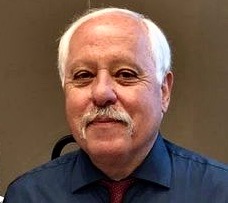
This year's reunion included a special treat: my high school journalism instructor David Bailey. Mr. Bailey taught and coached cross country at Lincoln High School for 50 years. When I thanked him for his mentorship, he asked me if I ever made a career in journalism. "Yes," I said, "but I got out after working as a newspaper reporter and editor for seven years." "What then?" he inquired. "Public relations." "Good choice," he smiled.