Wednesday, July 28, 2010

Running On Empty

Running on empty? Are we talking about the miserable state of the economy in the United States? Or perhaps the dreaded "end of oil?" (http://gonzopublicrelations.blogspot.com/2008/05/end-of-oil.html)

Well, uh, neither actually.

Singer-songwriter Jackson Browne and longtime collaborator David Lindley blew into Eugene for a concert at the Cuthbert Amphitheatre, where they performed Browne's seminal hit "Running On Empty" and a host of other classic ballads on Tuesday, July 27.

Gina, Jory and I had good seats up front for the show. In addition to a variety of eclectic tunes performed individually and together, these talented musicians performed a number of old standards including "Late for the Sky," "I'm Alive," "Too Many Angels" and "Doctor My Eyes."

Fantastic show all around.

Saturday, July 24, 2010

Full Circle

On Thursday, July 15, it was back to Owl Farm for a bit of frolicking in the forest -- as well as fraternizing with friends -- for a week.

One reason for the trip was to attend a program on Forest Service history at Barn Beach Reserve in Leavenworth, Washington. The program was billed as a "trip back through time" with A.H. "Hal" Sylvester, the Wenatchee National Forest Supervisor from 1908-31.

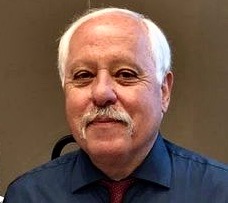
So, along with fellow former wilderness ranger Kelly Tjaden and his grandson Zachary, we witnessed a one-man performance of the life and times of Hal Sylvester as portrayed by Denny McMillin (left, in character), our supervisor during our Forest Service days on the Lake Wenatchee Ranger District, on Friday, July 16.

Denny was Resource Assistant on the Lake Wenatchee Ranger District when Kelly (below, right) and I roamed the Glacier Peak Wilderness back in the '70s.

Sylvester, a pioneer surveyor and explorer, was initially a topographer for the U.S. Geological Service. His work involved the first detailed surveying and mapping of large portions of the Cascade Range in the State of Washington.

Over the course of his career, he named as many as 3,000 natural features in the Cascades -- including the Enchantments, a series of Hobbit-like pools high in the Alpine Lakes Wilderness southwest of Leavenworth. His names were often creative and patterned, sometimes practical and descriptive, and occasionally whimsical.

His survey work often required placing cairns and other survey targets on top of mountains; as a result, he made a number of first ascents on peaks in heretofore unexplored areas known only to indigenous people. Tragically, Sylvester was mortally wounded when his horse panicked an a steep and rocky slope while leading a party of friends to one of his favorite parts of the mountains.

Sylvester once wrote that of all the many places he had explored, the Buck Creek Pass area in the upper Chiwawa River Valley was the most beautiful. The Chiwawa River empties into the Wenatchee River adjacent to Owl Farm, our mountain property near Plain, Washington.

On Tuesday, July 20, friend and Owl Farm neighbor Frank Czubiak joined me for a hike into Lake Valhalla (left and below), one of the many wilderness lakes named by Sylvester, a literary enthusiast with a penchant for mythology and the classics.

Valhalla, from Scandinavian mythology, is the hall of Odin (the Supreme Being) where the souls of heroes slain in battle and others who have died bravely are received (read: heaven for martyrs for the cause).

Lake Valhalla is located on the Pacific Crest Trail north of Stevens Pass in the Henry M. Jackson Wilderness. That morning, Frank and I motored up the Little Wenatchee River over Rainy Pass to the trailhead at Smithbrook.

The mile-long Smithbrook trail connects to the PCT at Union Gap. The route then proceeds another 2.5 miles south to Lake Valhalla. It was a good day for hiking, though the mosquitoes were hatching rapidly by afternoon. Thank God for bug dope.

In addition to seeing Denny and our hike, Frank and I spent quality time with Chuck Ferguson, Roger Wallace, Steve Steinke and other friends from our Forest Service days that week.

We had, as Kelly so eloquently described it, come "full circle," from our days as seasonal wilderness rangers working their way through college, through busy professional careers, and back.

Friday, July 23, 2010

Feeling Ducky

Like virtually thousands of other University of Oregon men's basketball fans, I have been eagerly awaiting the opportunity to select my seats in the new Matthew Knight Arena (right) on the UO campus. The big day finally arrived on Tuesday, July 13.

My friend Randy Enders and I proceeded to Autzen Stadium and rode the elevator to Duck benefactor Phil Knight's sky suite, where the selection process would take place.

As a 25-year season ticket holder to UO men's basketball, I liked our chances for decent seats in the new arena. Though by no stretch of the imagination could we be considered large donors to the program, we would nonetheless be rewarded for our loyalty with a grouping in the second tier of fans allowed to choose their seats.

Our goal? Find the best seats for the most reasonable cost. The result? Mission accomplished. We now have front row seats in the rear loge section wedged strategically between the student sections and directly behind the band.

It's as if the powers-that-be felt it appropriate to put Mr. Ducklips (http://gonzopublicrelations.blogspot.com/2008/12/mister-ducklips.html) in the noisiest corner of the arena. Gotta love it.

My hat is off to the folks in the UO Athletic Department for developing a well organized process that was fair and equitable. Go Ducks!

Sunday, July 11, 2010

My Name Is "Mittwochen"

Being semi-retired, one of the first lessons I learned was that the best time to do virtually anything -- from shopping at Market of Choice to hiking in the backcountry -- is the middle of the week, when everyone else is either at work or school.

So in the spirit of adopting a trail name like all of the through-hikers I met on the Pacific Crest Trail last summer, I have borrowed "Midwochen" (German for "Wednesdays"), from GonzoPR Chief Spokesman Helmut Vallindaklopf, as my trail name for 2010.

Thus newly-christened, I departed Owl Farm for the Minotaur Lake trailhead up Rainy Creek in the upper Little Wenatchee River drainage on Thursday, July 8.My goal was to climb Labyrinth Mountain, a 6300-foot massif that looms over both Minotaur (top) and Theseus (bottom) Lakes in the Henry M. (Scoop) Jackson Wilderness, a smaller preserve on the south end of the Glacier Peak Wilderness.

Henry M. Jackson (D-Wash.) was -- along with Warren G. Magnuson (D-Wash.) and Mark O. Hatfield (R-Ore.)-- one of the last great Northwest pork-barrel politicians of the 20th century.

As chair of the U.S. Senate's Interior Committee, Jackson shepherded passage of much of the significant environmental legislation of the 1960s, including The Wilderness Act, which immediately protected 9 million acres of wilderness land and created a procedure for protecting additional backcountry as wilderness.

The trail to the top of Labyrinth Mountain starts at the Minotaur Lake Trailhead and ascends about 2,500 feet to the summit of the peak, which features an outstanding view of Glacier Peak (below).

Most of the natural features in the area were named by A.H. Sylvester, a topographer for the U.S. Geological Service and the first forest supervisor of the Wenatchee National Forest. His whimsical names were often creative, patterned and unusual while sometimes practical and descriptive.

In Greek mythology, the Minotaur -- a nasty creature with the head of a bull on the body of a man -- was held captive by King Minos of Crete in the Labyrinth, an elaborate maze-like prison. The Minotaur was eventually killed by Theseus, the founder/hero of Athens. Sylvester named Labyrinth Mountain for the complex contours of the peak.

At the trailhead, I met two young hikers from Leavenworth -- Isaac and Lily (right). I let them go first because they would have passed me anyway. But I caught them at Minotaur Lake, while they enjoyed a nice leisurely lunch.

I trudged on in the snow and actually reached the summit first, but they weren't far behind. They very graciously snapped some pix, including the shot at bottom in front of Theseus.

As a parenthetical footnote, I'm heading back to Owl Farm this week for more backcountry adventures and the opportunity to see my supervisor from my Forest Service days -- Denny McMillin -- perform his one-man show of the life and times of A.H. Sylvester.

Wednesday, June 23, 2010

Summertime Blues

We logged the first couple of days of summer this week, with the solstice marking the longest day of the year on Monday, June 21. But the warm and sunny weather that usually accompanies our season of daylight has been "absent without leave."

Weather wonks generally concur that Eugene has set a new record for the latest arrival of an 80 degree day. As rock-and-roll icon Eddie Cochran might croon: "there ain't no cure for the summertime blues."

However, longtime hiking/climbing companion Steve Still and I may have found the antidote for the tepid start to summer with a hike up Deception Butte on Tuesday, June 22, when the sun made a cameo appearance just long enough for us to complete the trek. The trail starts near Deception Creek (above), which looks a lot like the set of Jurassic Park, and ascends to the 4000-foot summit of the butte.

The hike would mark the first trip for my new boots, a pair of Vasques that REI so graciously provided me after my Montrail Moraines expired on the Pacific Crest Trail in Washington last summer (http://gonzopublicrelations.blogspot.com/2009/09/pct-day-one-these-boots-are-made-for.html).

So this would be my first hike in an effort to "break in" my new boots, which I've always considered a misnomer: the boots actually "break in" the feet, which can be quite painful. Three miles in, I was back in my tennis shoes, with hot spots on both heels.

Other than that it was a fabulous hike: solid workout with no bugs. The mountain rhododendrons were in bloom (above) and the temperature was quite pleasant. The summit provided views of the town of Oakridge and Diamond Peak (below).

Who said "there ain't no cure for the summertime blues?"


Sunday, June 20, 2010

Mia Nonna

In anticipation of my trip to Italy later this summer, I thought I'd provide you -- my faithful readers -- with some background on my ancestry, starting with my grandmother; she was christened Gemma Emilia Bricchetto near Genoa, Italy in September, 1893.

As previously noted in these pages, she came to America in 1912 at the age of 18, along with her mother, Maria, and siblings Paul (16) and Eva (13). Her father, Giovanni (John) Bricchetto, had emigrated to the United States in 1899, abandoning the family for a new life in Boston, Massachusetts with another woman.

While her mother was along for this adventure of a lifetime, everybody involved knew who was riding herd on this brood: my grandmother, of course! She went by "Emilia" but also answered to "Gemma" or much later, "Gramma" or "Tata" (aunt).

Crossing the Atlantic Ocean, Emilia and her family negotiated the entire breadth of the U.S. enroute to Portland, Oregon, of all places. Most other Italian immigrants settled in Boston, New York, Chicago or other east coast cities. But they had family in the City of Roses and that's where they landed. None ever returned to Italy, even to visit.

After her first husband had died unexpectedly, my grandmother married Carl Joseph Cargni, an immigrant from the Piedmont region, famous for the Italian Alps.

Carl and Emilia raised two children: my mother, Charlotte Nitta Cargni and my uncle, John Valentino Cargni. All in all, they had eight grandchildren, most of whom are pictured below.

My grandfather died when I was very young, so I didn't really have the opportunity to know him. My grandmother, however, lived to be 93 and was a guiding presence in many of our lives into adulthood.

As the eldest in a family of five, I spent a considerable amount of time with "Gramma" as she was known. We even lived with her for a time. All the kids loved to go to Gramma's house, and not just because of her cooking, which was eccellente.

For me, Emilia provided me with needed wisdom, insight and humor, much like "Old Lodge Skins" in Little Big Man, the Native American grandfather of Dustin Hoffman's character in the movie. To say she had a profound influence on many of our lives would be an understatement. Although she passed away in December, 1986, she will always remain mia nonna -- my beloved grandmother.

As I reflect on my grandmother today -- on Father's Day, 2010 -- I recall that her biggest regret was that she never saw her father, John Bricchetto, again. She always said she would have loved that.

Thursday, June 3, 2010

"Batti Il Ferro Finché è Caldo"

The Italian phrase in the headline means, quite literally, to "strike while the iron is hot." Doing just that last week, I pulled the trigger and booked passage to Italy, the land of my forebears, in September.

The plan is to fly into Milan and then travel by train to Genoa in the province of Liguria. My grandmother lived near Genoa in the village of Orero before emigrating to the United States with her family in 1912.

My grandmother -- Gemma Emilia Bricchetto (below left, seated) her sister Eva (below right, standing) her mother and brother -- arrived by ship at Ellis Island about the same time as the sinking of the Titanic.

In fact, the Brichetto familia would have been sailing across the Atlantic at the exact same time as the RMS Titanic, which left England on April 10 and sank on April 15, 1912. My grandmother's ship, the "Ancona," which departed from Genoa on or about April 9, arrived in New York on April 23, 1912, nearly 100 years ago.

Establishing a base at a hotel in Genoa, the birthplace of Christopher Columbus, I'll spend the first week exploring the Italian Rivera and the coastline east of the seaport leading to Cinque Terra (above, top).

Next, I'll travel to Turin in the province of Piedmont in the Italian Alps to visit the home of my grandfather, Carl Joseph Cargni.

Growing up in the shadow of massive, snow-clad Mt. Rosa (below, bottom) in the little village of Chialamberto, my grandfather led caravans through the Alps to France in his youth. Carl emigrated to America in November, 1904.

Perhaps not coincidentally, my grandparents -- who both hailed from the northwestern corner of Italy, a land of scenic seashores and majestic mountains -- relocated to the northwestern corner of the United States, a land of scenic seashores and majestic mountains.

My long-awaited trip to Italy will begin on September 7, flying from Eugene to San Francisco to Frankfurt, Germany, then on to Milan and arriving in Genoa on September 8. Bellissimo!