Tuesday, May 10, 2011

Windows Of Opportunity

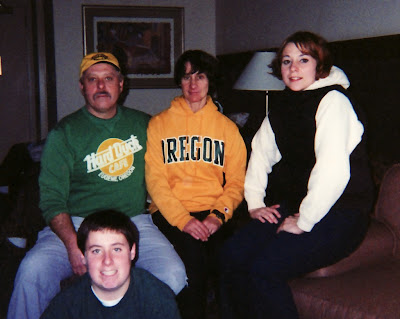
As we approach the end of the school year, both my j-school students (above) and I find ourselves in oddly similar circumstances, despite the difference in age, interests and perspective: we're all approaching one of those inimitable "windows of opportunity."

In class, we've discussed these extraordinary points in time -- the seminal moments in our lives when anything and everything seems possible. Despite what you may see or hear in the media, this celestial alignment is not as common as you might think.

From the time you arrive on this planet through high school, the first 18 years or so, you're on the educational track. At this point, you come face to face with your first window of opportunity. Following graduation (or not) from high school, you have a number of options.

If you're well-heeled, you can pursue your passion, whether it's kayaking in Sri Lanka or mountaineering in Bhutan. If not, you can defer your window of opportunity by spending the next several years in college, or the military. If you're really desperate, the French foreign legion is always an option.

Or you can delve into the working world. If that's the case, we'll catch you on the flip side. Short of winning the lottery, your next window will appear in about 40 years. Like I said, these windows of opportunity are rather infrequent, to say the least.

For my students, who will soon graduate from the University of Oregon SOJC, this is a heady time, full of possibilities.

Internship opportunity in Washington, D.C.? Why not? Study abroad adventure in Chile? Absolutely. Teach English in South Korea for a year? You betcha!

For me, the situation is much the same now that I'm "semi-retired": another window of opportunity awaits. I'll be off to Germany right after graduation for a tour of Bavaria with my daughter Gina, followed by a summer in the backcountry of the North Cascades.

One of many definitions of "window of opportunity" is this: "a short period of time during which an opportunity must be acted on or missed." In other words, it's now or never, for both me and my students (below, signaling the number one ranked college football team in the country at the time, the University of Oregon Ducks).

The portal to our next great adventure is nigh, and we're all poised to give the command: "open sesame!"

Thursday, April 28, 2011

Pure Cacophony

Editor's note: Now that I don't have to worry about finding a job, I'm less restrained when expressing my opinion on the hot topics "du jour." However, the downside is: I have become "one of them." You know the type: those crusty curmudgeons who can no longer abide some of the nonsense in the editorial pages of some newspapers. To paraphrase "Pogo," the long running daily comic strip created by Walt Kelly, I have seen the enemy and he is I. Herewith is my latest submission to The Leavenworth Echo.

To the editor:

Once again, we've have to weather the tired exhortations of Bill Cowles as he tries to convince us that "we have more oil and natural gas than all of the Middle East combined." He then cites the U.S. Geological Society (sic) as his source.

Sorry, Bill, but nowhere on its website has the U.S. Geological Service made that claim. Most credible sources for rankings of natural gas and oil reserves have the U.S. in the neighborhood of #12 to #15. But here's the deal; this isn't just a matter of supply but also one of demand. The U.S. consumes more fossil fuel than any other nation in the world by a country mile.

Until we start thinking outside the box and establish a comprehensive energy policy (we're one of the few countries in the world that doesn't have one), the U.S. will continue to reside behind the eight ball, a whole nation of oil junkies who need their fix from dealers located in the Middle East.

Sadly, much of what Bill Cowles has to say is pure cacophony. You can always tell, when someone has to remind you: "I do know what I am talking about." Perhaps the publisher of The Leavenworth Echo should consider a noise ordinance of his own.

Tuesday, April 12, 2011

Then There Were Giants

For me, this has been one of those weeks when the big stuff seems small and the little things loom large.

Professor Emeritus Ken Metzler -- my teacher, mentor and friend -- passed away in his sleep on Monday, April 11 at the age of 82. Though incredibly saddened by his sudden passing, I find solace in the fact that Ken stomped on the terra and influenced the lives of many, including yours truly.

I first met Ken as an undergraduate student back in 1973, when I took his class titled Production for Publication. A required class held in Room 221 in Allen Hall, home of the University of Oregon School of Journalism and Communication (UO SOJC), Ken Metzler was one of the few professors who could project to the back row in such a large lecture hall with his booming, resonant voice.

Despite his best efforts, he was unable to convince me of "the joys of copy fitting," though I finally did learn the math. Copy fitting is the only skill I learned from Ken that I don't use anymore; his interviewing tips and techniques are legendary. His formula for a good feature article -- "hey," "you," "see," "so," "ha!" -- is likely the only thing I specifically remember from my days as a journalism student.


Later, as a graduate student in Ken's Magazine Editing class, he appointed me -- of all the students in class -- as editor and publisher of the team assignment to develop a prospectus for a new magazine.

When I was hired as public relations coordinator at McKenzie-Willamette Hospital in Springfield, it was Ken who made the timeliest of calls on my behalf. My former supervisor at the hospital later told me that it was his enthusiasm for my skills and abilities -- as well as his authoritative voice -- that persuaded her to hire me.

A couple years later, it was Professor Tom Bivins and Ken -- serving a stint as Associate Dean -- who hired me from among all the other qualified candidates as an adjunct instructor at UO SOJC.

Ken's love of the outdoors is unquestioned. A native Oregonian like myself, Ken was born in Boring, southeast of Portland. One of his favorite headlines was "Boring Boy Weds Needy Girl." Both Boring and Needy are small towns in Clackamas County, Oregon. I have fond memories of hikes and river floats with Ken and his wife, Betty, and the j-school gang (Steve Ponder, with Bill Ryan and daughter, below).


On one particular trip down the McKenzie River, our raft (left, with Rebecca and Betty Metzler) exploded with a bang on the bank during a break, startling everybody in the immediate vicinity. We packed up the old raft and soldiered on with Captain Ponder for the remainder of the float.

I learned another important lesson from Ken on one of those many enjoyable raft trips: never drink wine like it's beer on a hot day.

Ken, a prolific author and storyteller, interviewed me for The Best of Oregon, a book that featured a medley of tales on his beloved home state. He was fascinated by my experiences as a tour guide and boat operator at Crater Lake National Park in the early '70s. To my delight, he listed me as a collaborator in the acknowledgements.

After retiring from the j-school in 1990, Ken volunteered for a variety of causes and was quite active, climbing Spencer Butte every few days and walking the bike paths along the Willamette River. In 2008, Ken was inducted into the UO SOJC Hall of Achievement. When I retired from EWEB, I invited Ken to my bon voyage party, introducing him to the crowd as my "Morrie" (from Tuesdays with Morrie by Mitch Albom), the professor who most profoundly influenced my life.

Meeting Ken for lunch on a number of occasions recently, I informed him that I was writing a book. He immediately reminded me of a Winston Churchill quote: "Writing a book is an adventure. To begin with, it is a toy and an amusement, then it becomes a mistress, and then it becomes a master, and then a tyrant." He said he would meet me again soon with a bottle of whiskey and try to talk me out of it.

"What kind of book are you writing?" he asked. "I don't know how to describe it," I replied. "It's what I call 'hysterical fiction,' kind of a period piece based on some of my real-life experiences." "Oh, you're writing a novel. I could never write a book like that; you're much smarter than I am," he smiled with a twinkle in his eye, joking in his typically self-deprecating manner.

The morning of his passing, Duncan McDonald, Professor and former Dean of the UO SOJC, noted that Ken Metzler was among the last of a generation of journalism educators, a group that included Professors Rarick, Crawford, Duncan, Winter, Wales, Ewan, Lemert, Rea, Halverson, Nestvold and Nelson.

They're all giants in the field of journalism and communication, as well as journalism education, in the State of Oregon.

Editors note: Tip of the hat to Tom Bivins for the image of Ken swinging for the fences (above) and to Jack Liu for the shot of Betty, Donald and Ken (below), with some interloper in the background.

Saturday, March 19, 2011

Media Metamorphosis

As Bob Dylan would croon, "the times they are a-changin'" at the University of Oregon School of Journalism and Communication. Coming this summer, faculty, staff and students will temporarily abandon Allen Hall (above) in anticipation of a major two-year renovation project that will break ground in September.

The Allen Hall Transformation project, as it is known, will involve a three-story addition and a remodel, including energy and seismic upgrades to the existing wings built in 1923 and 1954. When completed In September 2013, a renovated Allen Hall (rendering below) will feature a sky-lit atrium, media galleries, signature lecture hall, new classrooms and faculty offices and a digital commons -- an open-air collaborative computer lab environment.

Pondering the impending changes to Allen Hall, I reflected upon my arrival on the University of Oregon campus in the early 1970s as a young pre-journalism major. "If technology advances as much in your careers as it has in mine, who knows what to expect?" I offered to students in my public relations writing class last week.

Back then, the newswriting labs had manual Underwood typewriters. In my photojournalism class, we learned how to roll film for chemical development and use an enlarger for making prints in a "darkroom." When working on page design and layout, we'd use "wax machines" to paste headlines and body copy onto galleys or "dummies," which would then be photographed onto metal plates for offset printing.

Today, new iMacs line the very classrooms previously occupied by the Underwood manuals. With digital photography eliminating the need for darkrooms, that space was reclaimed with more desks and iMacs with PhotoShop and other up-to-date photographic software. Publication design and production in this day and age begins and ends in a computer lab. The times have indeed changed.

Back then, broadcast production -- be it news or advertising -- could take weeks of scripting, shooting and editing in studios that very few facilities could provide. Today, you can write, shoot and edit a video production (some of it on your iPhone) during the day and have it posted on YouTube by dinnertime.

By way of example, check out this video, a j-school promo piece produced by two of my recent students and members of the UO PRSSA executive management team -- Claire Tonneson and Jesse Davis -- for their Strategic Public Communications class.

Over the past four decades, new technologies have revolutionized the traditional formats in the field of journalism while introducing new ways to communicate using social media. Although the school has experienced upgrades over the years, the time for a comprehensive renovation was overdue.

Since 1954, the j-school had simply outgrown the physical space available in Allen Hall. When I graduated from the school in the mid-70s, the student population numbered about 600; today, we have about 1,800 journalism and communication students.

And although media and methods of communicating will change, what will not change is the need for excellent communication professionals: public relations practitioners who can communicate through their writing and through the visual arts, as well as verbally.

Even with the power of the Internet and its transformation of communication, the veneration of bullet points, the cryptic quality of email and "tweets" and the digital onslaught that favors an almost brutal compression, good writing will continue to be the hallmark skill that students will develop at the University of Oregon School of Journalism and Communication.

In this case, anyway, the more things may change, the more they remain the same.

Tuesday, March 15, 2011

Willkommen Bei Den Bayerischen Alpen

Faithful readers, as many of you who peruse these pages already know, the closest town to Owl Farm -- our recreational property in the North Cascades of Washington State -- is Leavenworth, a Bavarian-themed tourist attraction. As a result, I have been intrigued by the prospect of exploring the real Bavarian Alps for some time.

Well, now I get my chance: I've booked passage on June 13 to Munich (above), where I will meet my daughter Gina, who will be completing a one-year stint teaching English in Poland. In addition to visiting the many "biergartens" of Munich, the plan is to explore the Bavarian Alps and catch many of the spectacular sights, including the Berchtesgaden and Gamisch-Partenkirchen, where the views of the Zugspitze -- Germany's highest peak -- are breathtaking.

Wedged into Austria, the Berchtesgaden is a compellingly gorgeous corner of Bavaria. Local legend has it that angels -- given the task of distributing the Earth's wonders -- were startled by God's order to get a move on and dropped them all here. The area features he Eagle's Nest, a lodge built for Adolf Hitler, the notorious German dictator (who was actually Austrian), for his 50th birthday.

Garmish-Partenkirchen is a beloved hangout for outdoor enthusiasts and the weathy bourgeoisie. Forming a stunningly beautiful natural divide alone the Austrian border, these mountains rise from the foothills so abruptly that the impact is all the more dramatic.

The rest of the time will likely be spent exploring Munich, the capital of Bavaria and -- who knows -- maybe we take a quick trip to Italy while we're in the neighborhood (it's only 289 miles, or about the distance from Eugene to Seattle). Benedictine monks, drawn by fertile farmlands and proximity to Catholic Italy, settled in Munich (below). The city derives its name from the medieval "Munichen," or monks.

Perhaps we will be obliged to visit my newfound friends in the land of my forebears: Genoa, the heart of the Italian Riviera.

Sunday, February 13, 2011

Planet Of New Orleans

Editor's Note: In the first of hopefully many future retrospectives in GonzoKaleidescope (the feature promised in a press release in this space almost a year ago), the following was a review of Gonzo's first trip to New Orleans during Halloween Week in 2003. In anticipation of the culmination of Mardi Gras on Fat Tuesday, March 8, here's a reprise of an article originally written for the UO PRSSA newsletter.

After the six-hour flight from Portland, my goal was to get to my room at the Radisson New Orleans, which doubled as the 2003 Public Relations Student Society of America National Conference Headquarters, as expeditiously as possible. Little did I know that my wait in line at the hotel registration desk would rival my flight time from the City of Roses to "The Big Easy," as it has come to be known.

Arriving at the Radisson on Canal Street in the French Quarter, a smartly-dressed bell-hop in full uniform, complete with matching hat, shirt and short pants greeted my with a jovial "may I carry your bags, sir?"

Since the doors were glass, it was clear that the line for the registration desk extended all the way to the hotel entrance. "No thanks," I replied. "I think I have everything under control."

What transpired next was very likely my longest wait ever to secure a hotel room. After two hours of waiting alongside increasingly disgruntled students, some of whom were left without a room despite having reservations, I finally received a key card to my room.

Our student contingent from the University of Oregon was less fortunate than I. After a long wait, they finally did receive key cards to their room. There was just one problem. When they went to their room, another group of students were already there. "You're the second group they've sent up here," they were informed.

Who would have thought life could be so hard in "The Big Easy?"

The problem, we ascertained, was twofold: overbooking and a major hotel remodeling project virtually guaranteed chaos in this highrise adjacent to the French Quarter.

In hindsight, I was lucky I only needed a room for myself.

My UO students persevered and prevailed, checking into a nearby Comfort Inn. However, their new berth would cost more, which could be an issue when reconciling expenses.


The next morning, at a conference session entitled "effective crises communications," we collectively took note when the speaker told the group of young public relations professionals that they need to "stay out in front of a crisis."

"Did the Radisson believe that a lack of available rooms, slow banquet service and various other problems would go unnoticed among the hundreds of public relations students from across America?" I asked myself.

"Didn't the management realize that these very same students would someday become public relations professionals with a choice of where they might want to stay during a business trip or vacation, and that they not only likely wouldn't choose to stay at the Radisson, but that would tell all their friends about their experience?"

Later that day at noon, after dealing with yet another tediously long wait for lunch, we pointed out the hotel's "public relations problem" to the PRSSA organizers. "We just wanted you to be apprised of our situation," noted Taraneh Foster, the most vocal in the group of UO students, "just in case PRSSA is named in any lawsuits over our failure to secure a room when we had reservations."

To its credit, the PRSSA National Conference Committee -- noting that it was indeed a public relations problem for the hotel -- agreed to cover the extra expense for the room at the Comfort Inn, and said the hotel would publicly acknowledge the problems.

The whole issue provided a real-life case study in crisis communications, with good news on two fronts. The UO PRSSA students could be assured that they wouldn't have to dig deeper for the extra dough for their room during the conference. And the Radisson would offer its regrets to all the PRSSA delegates at one of the general sessions, though none actually witnessed the "mea culpa."

I think we were all down in the French Quarter checking out the planet of New Orleans.

Standin' on the corner of Toulouse and Dauphine, waitin' on Marie-Ondine. I'm tryin' to place a tune under a Louisiana moonbeam on the planet of New Orleans.

In a bar they call The Saturn, and in her eyes of green, and somethin' that she said in a dream. Inside of my suit, I got my mojo root and a true love figurine for the planet of New Orleans.

New Orleans, the other planet, with other life upon it, and everything that's shakin' in between. If you should ever land upon it, you better know what's on it, the planet of New Orleans.

-- Dire Straits, On Every Street

Saturday, January 15, 2011

Everybody Duck

It was -- for the University of Oregon football team and Duck fans around the world -- a season for the ages.

On Monday, January 10, the Ducks slugged it out with Auburn University, the champions of the Southeastern Conference, in the apex of the college football world, the BCS national championship game. Contrary to conventional wisdom that pointed to a high-scoring affair, the game defied the form chart with a defensive donnybrook.

The exciting and tightly-contested outcome had to please both ESPN executives and advertisers alike. Viewed in millions of American homes on ESPN, the game would not only become the highest-rated program in the network's history, but the highest-rated cable television show ever with a 16.1 rating, according to Nielsen.

Pac-10 champions for the second straight year, Oregon battled toe to toe with Auburn for four quarters, but the Tigers eked out a 22-19 victory with a field goal at the buzzer. Despite the loss, Duck fans everywhere can be proud of their team: the University of Oregon finished the regular season with a 12-0 record and became one of the few to ever win the conference with an undefeated record.

And most were. However, the malcontents emerged almost immediately after the game with their vindictive, spiteful venom. Said one Register-Guard poster, signed "Donald Duck" (a pseudonym):"Two years in a row, and I must admit that (Duck football coach) Chip Kelly choked. Last year, it was the Rose Bowl: this year, the national championship. Chip is simply not ready for prime time. Sad, sad, sad."

Sad? The best season ever in Duck football history? You must be kidding. I have little patience for such sentiment.

Fair-weather fans like "Donald Duck," who only seem to be increasing in their numbers, clearly lack perspective. For those of us who have been following Duck football since they had only two sets of uniforms, there's a lot to like about this program.

It's been a long road from the outhouse (the Toilet Bowl, also known as the 1983 Civil War, the last 0-0 tie in college football history, an exercise in futility that included double digit turnovers and no points) to the penthouse (the BCS national championship game).

I first started following the Ducks in the 1960s, toward the end of the coaching reign of the legendary Len Casanova. My parents both attended the University of Oregon during their freshman year in college, though they both finished their degrees in the City of Roses, at the University of Portland and Marylhurst College.

The Ducks would play the occasional football game in my hometown of Portland, usually against USC, Oregon State or Washington. Hayward Field on the UO campus in Eugene only held 22,000, while Multnomah Stadium in Portland held 35,000, so it made more financial sense to play some games in the larger venue.

During my college years in the early '70s, the oft-coined expression by inebriated students was "the Ducks suck!"

That was the extreme view, not unlike our aforementioned "Donald Duck," the erstwhile fan.

However, despite all the adversity we faced as Duck fans, we always loved our Ducks, win or lose. I always believed that being a Duck was more real life. In real life, you don't always win.

During one Duck football game in the early 70s, a particularly excruciating loss to Cal, I turned to my j-school classmate, Jeff Foreman, and asked: "do you think we will ever go to a bowl game in our lifetime?" He shook his head "no."

Right then and there, we made a blood pact that if the Ducks ever were to go to a bowl game, we would be there to support our team -- anytime and anywhere.

About 14 years later, in 1989, the Ducks were invited to the Independence Bowl in -- of all places -- Shreveport, Louisiana. Jeff and I met my brother Robert, who flew in from Philadelphia, at the bayou bowl game.

Down two touchdowns in the third quarter, the Ducks rallied to win behind the passing of quarterback Bill Musgrave for the 27-24 win over the University of Tulsa Golden Hurricane.

With that modest success, the Independence Bowl would lead to bigger and better bowls. In 1990, we actually went to a warm weather bowl in Southern California, the Freedom Bowl.

After a couple of down years, some fans started grousing; they wanted to fire Head Coach Rich Brooks.

"Ditch Rich" signs were ubiquitous in the Autzen parking lot after the Ducks started the season 1-2 in 1994. But both Coach Brooks and the Ducks responded to their critics by finishing the season with a 8-1 run to win the league title outright and punch their ticket to Pasadena.

The University of Oregon would represent the Pac-10 Conference in the Rose Bowl, their first trip since 1958, and face the Penn State Nittany Lions in the "granddaddy of them all."

In 2001, the Ducks played in their first BCS bowl game, stampeding the University of Colorado Buffaloes and finishing as the #2-ranked college football team in the country.

Over the next 10 years, the Ducks appeared in a succession of lower-tier bowls until 2009, when they returned to the Rose Bowl, and this year, when they played in the BCS national championship game.

Aside from the game itself, there was a lot to like about the Ducks' first appearance in the big game. This season -- even with the loss to Auburn University -- was a victory.

The collective awareness of the University of Oregon generated by all the media attention during the 30-plus days of coverage leading up to the game is incalculable -- it would be virtually impossible to buy that level of exposure. Major coverage, in a very positive way.

And as they say: "a rising tide lifts all boats." The game not only helped raise the profile of the football team, but the University of Oregon itself. The Ducks were "feelin' the love" from sea to shining sea, and even Jimmy Fallon weighed in on the subject on his show.

And, like it or not, the Ducks have become the gold standard of college football. Oregon is now one of the top ten programs in the nation: they are successful, they are recognizable and they are in a position to stay there.

It's been a long and winding road from Shreveport, Louisiana to Glendale, Arizona. And to those "nattering nabobs of negativism" (the fair weather Ducks like "Donald Duck," the aforementioned Register-Guard poster), I say this: loyal fans of the University of Oregon will always love their Ducks -- unconditionally.

As Head Coach Chip Kelly says: "we'll be back," and Duck fans have every reason to believe him.