Always loved baseball, starting at an early age. In all, I played 12 years of organized ball, from Cherry Park youth teams to Montavilla Little League to Madison-area Babe Ruth to Ascension Catholic Grade School to jayvee ball at Jesuit High School to varsity baseball and American Legion for Lincoln High School in Portland, Oregon.
As an Italian-American kid in the '50s, I worshiped the New York Yankees, especially Mickey Mantle. The man he replace as hero of the Bronx Bombers, Joe DiMaggio, had finally normalized Italian-Americans (seen by many as enemies during WWII) as both worthy and extremely talented people in sports, entertainment and more.
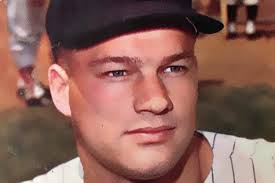
So naturally, I was saddened to hear of the passing of Jim Bouton (top), a Yankee pitcher during the glory years of the '60s. He won both starts in the 1964 World Series. The year before, he won 20 games with the Yanks. Despite his accomplishments, he is best known as the author of his tell-all book, Ball Four.
The book, which was wildly popular, described the risqué antics of the Yankees. It was an unfiltered look at professional sports teams, covering the off-the-field side of baseball life. The book made the Yankee pitcher unpopular with many. Listed in Time Magazine's 100 greatest nonfiction books of all time, Ball Four proved to be a baseball classic.
The baseball commissioner, Bowie Kuhn, described Ball Four as "detrimental to baseball" and attempted to oblige Bouton to sign a statement saying the book was fictional. However, Bouton refused to sign or deny any of the revelations in Ball Four. His reflections on Mickey Mantle were most notorious. I had no problem with it.
Bouton's frequent appearances likely contributed to nagging arm problems, effectively ending his status as a phenom. Relegated to bullpen duty, he turned to the knuckleball, a wild and crazy pitch that jumps around as it approaches the plate, confusing hitters. If performed correctly, it can be quite effective.
By the late '60s, Bouton had been traded and landed in Seattle on a minor league club, and I had become disenchanted with the Yankees. I never liked dynasties, which is why I was so pleased when the Toronto Raptors beat the seemingly invincible Golden State Warriors in the NBA Finals this year.
Shortly after, big league baseball arrived in the Pacific Northwest: the Seattle Mariners, who have, since then, become "my team." Admittedly, they were woeful at first, but turned the corner in 2001, winning 116 games, an American League record. Plus, I had moved on to football (Ducks!) and basketball (Blazers!).
Naturally, I also love baseball movies of all varieties, from the sublime (Field of Dreams,The Babe Ruth Story, Pride of the Yankees) to the nostalgic (The Sandlot, The Natural, A League of Their Own) to the ridiculous (It Happens Every Spring, Major League, Angels in the Outfield), and all points in between.
And books: Moneyball: The Art of Winning An Unfair Game, The Boys of Summer, The Last Boy, Mickey Mantle, and the End of America's Childhood, Eight Men Out, Wait Till Next Year, Men At Work, Bang the Drum Slowly, The Glory of Their Times, and Joe DiMaggio: The Hero's Life.
Today, I'm a big fan of many sports, including tennis, soccer, aquatics, gymnastics, lacrosse and more. I draw the line at championship poker and hockey. Does anyone actually watch hockey? Perhaps those in the northern latitudes who can't reasonably or practically play baseball until the middle of summer.
But I will always have a soft spot for baseball, and it was Ball Four that captivated me. I recommend it to those who have not read the tome. Not surprisingly, the book coincided with my rebellion against (and freedom from) authority (Catholic schools, the Free Speech Movement, anti-Vietnam War protests).
Friday, July 12, 2019
Sunday, June 23, 2019
Endgame Epiphany
No, there will be no spoilers on the latest Avengers movie here. I would never do such a thing. This is about the end of one chapter in my life and the beginning of another. After 33 years of teaching as an instructor at the University of Oregon School of Journalism and Communication, my contract has expired and will not be renewed.
An "endgame" is the degree to which you've become deeply involved or invested in a career, relationship or other endeavor, and must endure the final stages of said relationship or activity. "Epiphany" is a rare occurrence and follows a process of considerable thought and reflection about an occurrence triggered by new information.
As Shakespeare penned, "parting is such sweet sorrow." Thus ends an association that began as a student at the UO SOJC in the early 1970s. As an instructor, I have always viewed myself more like the character John Keating (Robin Williams) in Dead Poets Society than Mr. Chipping (Peter O'Toole) in Good-bye, Mr. Chips.
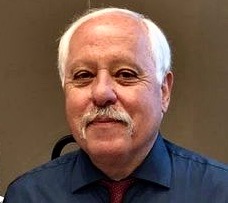
Encouraged by my grad school advisor Ken Metzler (above, right) to apply, I was hired as a part-time instructor in 1986, shortly after beginning my career job as a communications professional at Eugene Water & Electric Board. Naturally, I had to obtain permission from my supervisor to moonlight as a writing instructor at UO SOJC.
My time as an instructor has literally comprised half my life at this point in time. For the first 22 years, I taught part-time while working my career job at EWEB. Since retiring from the local public utility in 2008, I have worked full-time at UO SOJC. In 1995, I doubled down as professional advisor for the UO chapter of PRSSA.
More professional public relations practitioner than academic, I agree that the connotation of "teaching" may seem one-dimensional. As an instructor, I consider what I do as more of a "facilitator of the learning experience." Ideally, teaching is more of a holistic process between teachers and students for the ultimate benefit of both.
My best role models for teaching were priests at Jesuit High School. They don't describe the followers of St. Ignatius Loyola as "soldiers of Christ" for nothing. These folks were serious about academic achievement, and the "men in black" also provided stern lessons in more practical methods of motivation (wink, wink, ouch).
As an instructor, I affirmed that the most important skills you can develop in public relations are interviewing, writing and public speaking. Interviewing is most important in becoming a good reporter to acquire appropriate information and quotes to use when you write. A good reporter is first and foremost a good interviewer.
Numerous surveys conducted by the Public Relations Society of America and other PR think-tanks have shown that writing consistently ranks first among the major job skills in the field of public relations. As a result, I primarily focused on working with students on approaches and techniques to improve their writing.
For example, public relations students need to know why a noun is preferable to a pronoun, why active verbs are superior to passive verbs, and what might make a good formula for a feature article. A typical student comment on my course evaluations over three decades? "My writing has tightened up considerably."
Despite the advent of the new media, the Internet and other rapidly changing technologies, effective tactics still boil down to one key ingredient: clear and effective writing. Good writing continues to be a life skill of paramount importance, regardless of profession or discipline.
I also encourage students to consider the importance of excellence in public speaking -- corporate advancement, increased sales, new business contacts, political support and community relations -- to help them understand the value of good writing and develop their skills in the delivery of a high-quality presentation.
But students not only need to know what we -- as PR practitioners -- do, but how and why we do it. By learning how theory and practical application work as one, an integrated approach can help students articulate their own ideas. That's why I encourage critical thinking, along with development of written and oral skills, in my PR classes.
Students clearly have a knowledge base that can be used to test what I present in class. A true learning experience requires active engagement in the learning process. It provides a kind of freedom that no one can ever take from them. I see it on their faces when that instance of discovery occurs, that "aha" moment of recognition when they see improvement in their writing skills.
As a PR practitioner teaching in a professional journalism and communications school, I naturally incorporate hands-on experience into my lectures and coursework, which fits within the philosophy of the UO SOJC and is valued by students. Another common refrain in my course evaluations: "He brings real world experience."
I also believe that what we do in the classroom is as important as what we say in lectures. By exhibiting good communications skills, concern and compassion for students, and maintaining enthusiasm for the subject matter we teach, we also impart the value of our subject and profession. It's called "leading by example."
To truly excel as an instructor or advisor, you must be a good listener. Another theme that emerges in my course evaluations: "He listens and can relate to his students better than most." A maxim in my life, both as an educator and public relations professional, is based on a simple observation: I learn more from listening than from speaking.
Another role is to help students succeed in the unique environment of the University of Oregon. In all their endeavors, I preach that quality work is always derived from people of quality. In Zen and the Art of Motorcycle Maintenance, the author says that quality depends on three things: self-reliance, integrity and gumption.
If you are self-reliant, you won't blame your boss, or your mother, or your journalism teacher, for the kind of work you do. Second, you have to like who you are and what you do. Third, no matter how many accolades or awards you receive, you must have the gumption to always give it your best effort -- one more time.
In 2011, I was honored to receive the UO SOJC "instructor of the year" award as nominated by students and judged by a panel of deans and associate deans. That same year, I was recognized by PRSA as a "champion" of the Public Relations Student Society of America for my long tenure as professional advisor for the UO chapter.
So concludes a noteworthy association in my life. The "epiphany," if you will, is this: it's the end of a chapter, not the end of the book. I have embraced my roles as student, professional, and educator. With writing projects galore, I see this less as reinvention and more as evolution, a natural progression as a writer and photographer.
I will miss my colleagues but embrace my role as artist. Mostly, I have enjoyed my interactions with thousands of my students (including my daughter Gina, a PR major) that I've been blessed to teach. Fortunately, I remain connected with many through social media, so our association will continue. For that, I remain eternally grateful.
An "endgame" is the degree to which you've become deeply involved or invested in a career, relationship or other endeavor, and must endure the final stages of said relationship or activity. "Epiphany" is a rare occurrence and follows a process of considerable thought and reflection about an occurrence triggered by new information.
As Shakespeare penned, "parting is such sweet sorrow." Thus ends an association that began as a student at the UO SOJC in the early 1970s. As an instructor, I have always viewed myself more like the character John Keating (Robin Williams) in Dead Poets Society than Mr. Chipping (Peter O'Toole) in Good-bye, Mr. Chips.
Encouraged by my grad school advisor Ken Metzler (above, right) to apply, I was hired as a part-time instructor in 1986, shortly after beginning my career job as a communications professional at Eugene Water & Electric Board. Naturally, I had to obtain permission from my supervisor to moonlight as a writing instructor at UO SOJC.
My time as an instructor has literally comprised half my life at this point in time. For the first 22 years, I taught part-time while working my career job at EWEB. Since retiring from the local public utility in 2008, I have worked full-time at UO SOJC. In 1995, I doubled down as professional advisor for the UO chapter of PRSSA.
More professional public relations practitioner than academic, I agree that the connotation of "teaching" may seem one-dimensional. As an instructor, I consider what I do as more of a "facilitator of the learning experience." Ideally, teaching is more of a holistic process between teachers and students for the ultimate benefit of both.
My best role models for teaching were priests at Jesuit High School. They don't describe the followers of St. Ignatius Loyola as "soldiers of Christ" for nothing. These folks were serious about academic achievement, and the "men in black" also provided stern lessons in more practical methods of motivation (wink, wink, ouch).
As an instructor, I affirmed that the most important skills you can develop in public relations are interviewing, writing and public speaking. Interviewing is most important in becoming a good reporter to acquire appropriate information and quotes to use when you write. A good reporter is first and foremost a good interviewer.
Numerous surveys conducted by the Public Relations Society of America and other PR think-tanks have shown that writing consistently ranks first among the major job skills in the field of public relations. As a result, I primarily focused on working with students on approaches and techniques to improve their writing.
For example, public relations students need to know why a noun is preferable to a pronoun, why active verbs are superior to passive verbs, and what might make a good formula for a feature article. A typical student comment on my course evaluations over three decades? "My writing has tightened up considerably."
Despite the advent of the new media, the Internet and other rapidly changing technologies, effective tactics still boil down to one key ingredient: clear and effective writing. Good writing continues to be a life skill of paramount importance, regardless of profession or discipline.
I also encourage students to consider the importance of excellence in public speaking -- corporate advancement, increased sales, new business contacts, political support and community relations -- to help them understand the value of good writing and develop their skills in the delivery of a high-quality presentation.
But students not only need to know what we -- as PR practitioners -- do, but how and why we do it. By learning how theory and practical application work as one, an integrated approach can help students articulate their own ideas. That's why I encourage critical thinking, along with development of written and oral skills, in my PR classes.
Students clearly have a knowledge base that can be used to test what I present in class. A true learning experience requires active engagement in the learning process. It provides a kind of freedom that no one can ever take from them. I see it on their faces when that instance of discovery occurs, that "aha" moment of recognition when they see improvement in their writing skills.
As a PR practitioner teaching in a professional journalism and communications school, I naturally incorporate hands-on experience into my lectures and coursework, which fits within the philosophy of the UO SOJC and is valued by students. Another common refrain in my course evaluations: "He brings real world experience."
I also believe that what we do in the classroom is as important as what we say in lectures. By exhibiting good communications skills, concern and compassion for students, and maintaining enthusiasm for the subject matter we teach, we also impart the value of our subject and profession. It's called "leading by example."
To truly excel as an instructor or advisor, you must be a good listener. Another theme that emerges in my course evaluations: "He listens and can relate to his students better than most." A maxim in my life, both as an educator and public relations professional, is based on a simple observation: I learn more from listening than from speaking.
Another role is to help students succeed in the unique environment of the University of Oregon. In all their endeavors, I preach that quality work is always derived from people of quality. In Zen and the Art of Motorcycle Maintenance, the author says that quality depends on three things: self-reliance, integrity and gumption.
If you are self-reliant, you won't blame your boss, or your mother, or your journalism teacher, for the kind of work you do. Second, you have to like who you are and what you do. Third, no matter how many accolades or awards you receive, you must have the gumption to always give it your best effort -- one more time.
In 2011, I was honored to receive the UO SOJC "instructor of the year" award as nominated by students and judged by a panel of deans and associate deans. That same year, I was recognized by PRSA as a "champion" of the Public Relations Student Society of America for my long tenure as professional advisor for the UO chapter.
So concludes a noteworthy association in my life. The "epiphany," if you will, is this: it's the end of a chapter, not the end of the book. I have embraced my roles as student, professional, and educator. With writing projects galore, I see this less as reinvention and more as evolution, a natural progression as a writer and photographer.
I will miss my colleagues but embrace my role as artist. Mostly, I have enjoyed my interactions with thousands of my students (including my daughter Gina, a PR major) that I've been blessed to teach. Fortunately, I remain connected with many through social media, so our association will continue. For that, I remain eternally grateful.
Saturday, June 1, 2019
Fun For Sale
A communications challenge facing me in my time in public relations and marketing for Eugene Water & Electric Board (EWEB) was emphasizing use -- and conservation of -- a product that was essentially invisible: electricity. We accomplished that task by addressing end uses, or values, provided by the product.
Having previously owned a 1990 “smurf blue” Miata, I was considering another ride and pondered buying a new one prior to retiring from EWEB when my mechanic suggested a used Miata for sale by one of his other customers. “You’ll want to check this one out,” he said. “It’s in perfect condition.”
“Yes,” came the response. “It’s my mother’s car. She’s 96 years old, so I convinced her to give up driving.” I queried: “Did she just drive it to church on Sunday?" He replied, “No, she didn’t go to church. She drove it to the spa once a day.” “Really?” I asked. “What did she have before the Miata?” “A Triumph TR6,” came the response.
So imagine a summer day spent in a Mazda Miata with the top down, warm sun above, and a light breeze on your brow. It’s comfortable, good-looking and practical for a two-seater. Plus, its size, fuel economy and nimble handling make it a useful daily driver. Leave message at (541) 343-8506 if interested in viewing.
Friday, May 10, 2019
Outlaw Journalist
Identified by none other than Tom Wolfe as part of a cadre of feature writers and reporters experimenting with a fresh approach to literary nonfiction known as the “new journalism” in the 1960s and 1970s, Hunter S. Thompson’s career in the new milieu began when he wrote his first book: Hell’s Angels: A Strange and Terrible Saga.
A bright and charismatic youth, Hunter Stockton Thompson was also a hellion with a propensity for insubordination: a criminal in training. If I didn’t know better, I would assume he attended Catholic schools. Growing up in Louisville, Kentucky, his mother was a librarian and his father was an insurance adjuster.
His father died when Thompson was 14 years old from a rare disease, so he and his brothers helped his mother make ends meet. A lifelong hooligan with a penchant for shenanigans, Thompson was a lightning rod for trouble and the scourge of the block. Parents feared him and most forbade their kids from associating with him.
Juvenile delinquent? Yes. Heavy drinker? Certainly. But he was also a voracious reader. He admired the likes of Ernest Hemingway, William Faulkner, F. Scott Fitzgerald and later, Jack Kerouac, though like me, Thompson believed that Kerouac’s On the Road was the Beat Generation author’s only true masterpiece.
He was, in short, a charming and well-read trouble maker. After a litany of petty offenses, the law finally caught up with young Thompson, and a judge sentenced him to jail time. He was mortified. As with many errant youths, his incarceration led to a stint in the military, where he discovered journalism.
“I look back on my youth with great fondness,” he later wrote, “but I would not recommend it as a working model for others.” Joining the U.S. Air Force, he was initially pegged as an electronics technician, but he resisted and finagled his way onto the staff of the Command Courier, the base newspaper, as a sportswriter.
Nonetheless, he eventually found trouble again: drinking, carousing and insubordination. Capable of speaking volumes without even opening his mouth, his smirk dripped with condescension. Elvis would have admired his sneer. The Air Force wanted him out as soon as possible. He escaped with an honorable discharge.
His brief journalism career in the military led to a number of journalistic pursuits after his discharge. After working as a sports editor at the Jersey Shore Herald in Pennsylvania, he labored at short stints in New York at The New York Times, the Herald Tribune, the Telegram, the Journal, the Daily News, and the Mirror.
Eventually unemployed and restless, Thompson flew to San Juan, Puerto Rico, where he cobbled an existence as a stringer for the Louisville Courier-Journal, the Baltimore Sun, the Milwaukee Journal and other newspapers. He also began writing a novel drawn from his months in Puerto Rico: The Rum Diary.
Ultimately landing at Rolling Stone magazine, a modest start-up publication founded by Jann Wenner in 1967, Thompson’s career started to take off. Basically a rock ‘n’ roll magazine when he first arrived in 1970, Thompson believed Rolling Stone and its national audience would make a great platform for his work.
It was during these years that he began developing his own unique style. Like Hemingway, Thompson referred to himself in the third person and emphasized his proximity to the action. Like Kerouac, he used a pseudonym and featured a companion, and in many cases, reverted to standard feature writing techniques in storytelling.
In Jack Kerouac’s On the Road, the narrator was Sal Paradise (Kerouac) and his accomplice was Dean Moriarity (Neal Cassady). In Fear and Loathing in Las Vegas, Thompson adopted Raoul Duke as a pseudonym and his partner-in-crime was Dr. Gonzo (Oscar Zeta Acosta), whom Duke referred to as “my attorney.”
Following publication as a two-part article illustrated by Ralph Steadman for Rolling Stone, Random House published a hardcover edition, along with Steadman’s illustrations, in 1972. Though panned by many critics, book sales went through the roof. Wolfe described it as a “scorching epochal sensation.”
As college students, we devoured the tome, along with others in the new genre, with unbridled enthusiasm. The gist: journalist Raoul Duke and his accomplice, Dr. Gonzo, arrive in Las Vegas to cover the Mint 500 motorcycle race and the National District Attorneys Association Conference on narcotics and dangerous drugs.
Hailed by Pulitzer Prize-winning novelist Cormac McCarthy as “a classic of our time,” The New York Times called it “by far the best book yet on the decade of dope” and “a custom-crafted study of paranoia, a spew from the 1960s and -- in all its hysteria, insolence, insult and rot -- a desperate and important book.”
In 1977, his first appearance at the University of Oregon’s Erb Memorial Union Ballroom sold out quickly, but I secured a ticket, arrived early and sat up front. Calling his talk a “speech” would be inaccurate. His “modus operandi” was correctly portrayed in “Where the Buffalo Roam” starring Bill Murray as Thompson.
He would arrive late, usually at least an hour after the scheduled start time. Walking on stage to thundering applause, he had no prepared text, and announced he would dispense with his opening remarks and conduct a question-and-answer session while consuming a tumbler of Wild Turkey or Chivas Regal.
In 1984, he was enlisted by the EMU Cultural Forum, a student collective, to appear at venerable McArthur Court, the UO basketball arena, on campus. This time I was able to get even closer posing as a photojournalist. Several of the images I captured were legitimate keepers. I had several framed for posterity.
Waiting for an audience, I arrived at his desk and asked for his autograph on the framed picture I shot in 1984. He examined the image and showed it to his bodyguard, commenting: “How about that? Reminds me of the old days.” He then gave it to his cohort saying, “Put it with the other stuff.” Just like that, he absconded my photo.
Hastily, I gave him my Duck basketball ticket for an autograph, which he signed, and then moved to the next person in line. I was pissed. Luis and I stalked Kesey’s bus, where Thompson and Kesey had retreated after the show, assuming they would adjourn to the Vet’s Club, an old-timey bar, as he had done on previous trips.
We waited and waited and waited, probably well over an hour. Finally, the bus started to make an exit. “Let’s roll,” I said to Luis. Tailing the bus would be no problem, we thought. But instead of heading toward the Vet’s Club, they veered toward the I-105, clearly bound for Kesey’s farm near Pleasant Hill.
After Vegas, he wrote another series of articles compiled in a book chronicling the 1972 presidential election: Fear and Loathing on the Campaign Trail ’72. Frank Mankiewicz, the campaign manager for Democratic candidate George McGovern, would later call the book “the least factual (but) most accurate account” of the campaign.
Thompson later published a number of books, some revisiting old stories from his extensive freelance career, but none achieved the acclaim he had received from Vegas and Campaign Trail ’72. He died of a self-inflicted gunshot wound after experiencing a series of health problems at age 67 in 2005.
Thompson left quotable quotes: “Buy the ticket, take the ride. If it gets a little heavier than what you had in mind, well, maybe chalk it up to forced consciousness expansion.” And, “The edge…there is no honest way to explain it because the only people who really know where it is are the ones who have gone over.”
Then there’s this, from a purportedly official, but more likely fraudulent, news release issued by the Office of Information Service at Elgin Air Force Base in Florida upon Thompson’s discharge from the service: “I’ll never understand how he got this discharge,” Thurd went on to say. “It’s terrifying -- simply terrifying.”
Sunday, April 21, 2019
Journalism As Storytelling
A recent story in the local newspaper on “Further,” author Ken Kesey’s 1939 International Harvest bus immortalized in The Electric Kool-Aid Acid Test by Tom Wolfe, highlighted efforts by Kesey's son to renovate the old vehicle. The article brought back memories. But not of Kesey, an veritable icon in the Eugene-Springfield area.
Actually, visions of Hunter S. Thompson’s last visit to Eugene in the early 90s enveloped my brain. The colorfully-painted bus, parked out front at the Hult Center for the Performing Arts in downtown Eugene, awaited for an eventual getaway with Kesey after the show. But more on that tale in the next post on GonzoPR.
Kesey and Thompson were longtime cronies from the advent of the writing style of literary nonfiction known as the “new journalism.” Kesey, a University of Oregon graduate, had become established as a successful novelist in the 60s with publication of One Flew Over the Cuckoo’s Nest and Sometimes A Great Notion.
Thompson was among a burgeoning collection of newspaper and magazine writers known as proponents of the new style of reporting. He had published Hell’s Angels: A Strange And Terrible Saga. As an aside, I never liked the trending form of reporting described as the “new journalism.” Yawn. How uninspired.
Even Tom Wolfe, a pioneer in the form, disliked the term. “Any movement, group, party, program, philosophy or theory that goes under a name with ‘new’ in it is just begging for trouble,” he noted in an compilation of examples from the genre in “The New Journalism,” an anthology of the emerging genre published in 1973.
He continued: “I doubt if many of the aces I will be extolling in this story went into journalism with the faintest notion of creating a ‘new’ journalism, a ‘higher’ journalism, or even a mildly improved variety. Nevertheless, that is what happened.” It certainly had its roots in journalism: feature writing, actually.
A “feature," along with “human interest” pieces, was the newspaper term for a story that fell outside the category of hard news. Yes, it was journalism, including the basic tenets of interviewing and reporting. But early examples of journalists pioneering this unique direction wrote stories that read like a novel.
Only through the most searching forms of reporting was it possible -- in nonfiction -- to use whole scenes, extended dialogue, point-of-view and interior monologue. It was probably that approach, more than any specific devices or techniques, that led to the sudden popularity of a new literary style in journalism, said Wolfe.
In the mid-60s, an increasing awareness of an artistic excitement in journalism was new by itself. Most of its practitioners toiled for newspapers or magazines in the small sphere of “feature journalism.” Really stylish reporting was heretofore unique. No one thought of reporting as having an aesthetic dimension.
But there it was, working journalists plying their craft at places like the New York Herald Tribune (Jimmy Breslin), New York Times (Gay Talese), Washington Post (Tom Wolfe), and The Nation (Hunter S. Thompson), a cosmic awakening of sorts -- the very genesis of the concept of literary nonfiction.
Others writers joined the fray, helping establish the first new direction in journalism in half a century: Truman Capote, Terry Southern, Joe Eszterhas, Joan Didion, Joe McGinnis, and Robert Christgau, among other feature writers. Really stylish reporting was something no one exactly knew how to deal with.
That notion -- more than any specific devices, such as using scenes and dialogue in a novelistic fashion -- morphed into the grand idea about a new journalism, according to Wolfe. If a new literary style could originate in journalism, it stood to reason that journalism could aspire to provide something more, continued Wolfe.
These journalists, primarily magazine writers, found that realistic dialogue engages the reader more completely than any other singular approach. The third device, providing insights into more the minds of than one person, gives the reader the sense of being inside of the character’s mind.
With this approach, journalists used the techniques of injecting realism by moving from scene to scene, resorting to little historical narrative, while recording the dialogue, providing immediacy, reality and emotional involvement. The approach? Interview the subject about their thoughts and emotions, along with everything else.
The fourth and least understood device involved is the recording of everyday gestures, habits, manners, customs, plus various modes of behavior: toward children, servants, superiors, inferiors, peers, plus the various looks, glances, poses, styles of walking and other symbolic details that might exist within a scene, says Wolfe (bottom).
Critics predicted the demise of the new genre, yet it lives on in magazines, newspapers and blog sites on the internet. Indeed, the banner headline on the University of Oregon School of Journalism and Communication’s website notes that “Great Storytelling Starts Here: Change the World by Telling Its Stories.”
Whatever the title of the genre -- literary nonfiction or creative nonfiction -- the form survives and is, in fact, thriving. “Creative” simply refers to the use of literary craft in nonfiction. As Robert McKee noted, “Storytelling is the most powerful way to put ideas into the world today.”
Sunday, March 10, 2019
Like Clockwork
It’s back, whether you like it or not: daylight savings time. As someone who loves long summer days, I always enjoyed the extra hour of daylight. As a worker bee, I hated it. We fool ourselves by adjusting to clocks and watches, but the body clock is not duped by this charade, and the resulting chaos can last weeks.
With the exception of New Zealand (surprised?), and parts of one province each in Australia and Brazil, only a minority of the world’s population observes the practice. Even Russians said “nyet” Perceived advantages, besides the extra hour of daylight, included energy savings, reduced crime and longer business hours.
Disadvantages include a compromised “circadian rhythm” (body clock). Some take weeks of adjustment. Not good. For more on the subject of time, read GonzoPR’s most popular post in 2018. Fact is, there is no such thing as universal time. The nature of time lies within, and is unique to every human who has ever lived.
Monday, February 4, 2019
Ducks On The Pond
The networking event provides a gaggle of young Ducks with the opportunity to have one-on-one conversations with experienced professionals, receiving tips on how to prepare portfolios, how to conduct an effective interview to land that first job, and how to write and design an attention-getting resume and cover letter.
Though its genesis dates back to 2000, the event marked its 10th anniversary as the Portland Paddle this year. What’s particularly gratifying is seeing so many of my former students serving as professional reviewers with current students. Like ducks on the pond, these students are now poised for success in the PR job market.
Subscribe to:
Posts (Atom)