Wednesday, March 1, 2023

Vanishing Point

The largest glacier between the high volcanic peaks of Mount Rainier and Glacier Peak has finally disappeared after a long battle with global warmingFor thousands of years, the Hinman Glacier graced the crest of the Washington Cascades in the Alpine Lakes Wilderness.

Fifty miles due east of downtown Seattle, Mount Hinman sits deep in the Alpine Lakes Wilderness, midway between Snoqualmie Pass and Stevens Pass. Until recently, the Hinman was one of four named glaciers that provided cool water to the Skykomish River in the hottest, driest time of the year.

The glaciers of the Skykomish basin have lost 55 percent of their surface area since the 1950s. As Hinman Glacier dwindled in recent decades, late-summer flows diminished in the Skykomish River, bad news for salmon and farmers. The glacier was ancient, though how ancient is unknown.

In the 1950s, the Hinman Glacier flowed a mile and a half from the broad top of 7,492-foot Mount Hinman to the valley floor nearly 2,000 feet below. Mount Hinman gained protection from direct human disturbance in 1976 when it was designated part of the Alpine Lakes Wilderness.

But Hinman’s snow and ice were no match for the rising temperatures of the fossil fuel era. In 1958, the Hinman Glacier covered 320 acres, about half the size of Seattle’s Lake Union. In August 2022, the biggest patch of ice found was about 10 acres — too small and too thin to flow.

Glaciers are rivers of ice that flow from year to year, as their own weight compresses snow into ice. Most include striking features like deep crevasses and deep-blue ice, sculpting the land beneath them as they go. Two other glaciers on Mount Hinman, preceded the Hinman into oblivion.

The rounded peak and the glacier on its northwest side were named for Everett dentist and mountain climber Harry B. Hinman in 1934. He started the Everett branch of the Mountaineers in 1911. Few ever touched the Hinman Glacier, reachable only by off-trail scrambling and mountaineering.

Visiting the site in 2009 while hiking the Pacific Crest Trail from Stevens Pass to Snoqualmie Pass, we found the area to be magical. The Hinman Glacier touched many people by keeping the Skykomish River cool and flowing each summer and providing water. Sadly, however, it is now gone.


Wednesday, February 1, 2023

Beyond The Blip

Much like "the blip," the missing years featured in The Avengers: Endgame by the Marvel Cinematic Universe, the coronavirus pandemic disrupted the world. The Public Relations Student Society of America was no exception, with two-plus years of "virtual" events for students using Zoom to keep the ball rolling on their education, professional development and networking opportunities.

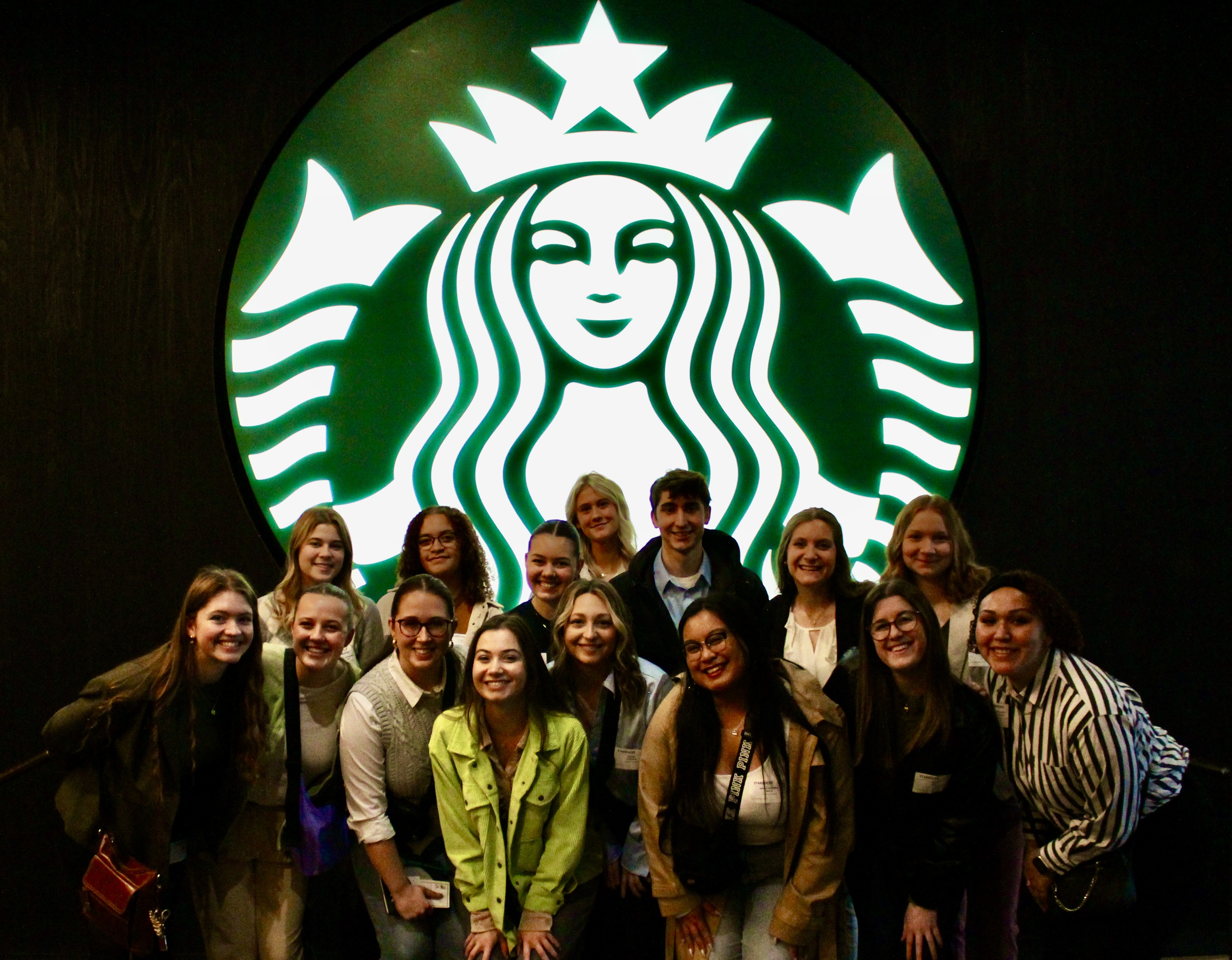
But last month, the UO Chapter of PRSSA boldly scheduled a professional development tour in Seattle, with plans to visit WE Communications (photo above), InkHouse Public Relations, Starbucks and The Fearey Group. Joining the sojourn as the group's professional advisor, we all departed Eugene, and after a long delay caused by an accident on I-5, we arrived in Seattle after a brutal nine-hour drive.

The professional development tour kicked off at WE Communications, formerly known as Waggener/Edstrom and founded in the early 80s. The agency is a global public relations and integrated marketing communications firm that is often associated with its largest client, the Microsoft Corporation. The agency's office in Bellevue is located not far from the Microsoft campus in Redmond, Washington.

Afterward, we shifted to downtown Seattle and the Pike Place Market near the waterfront, where I pointed out the very first Starbucks to the group. Visiting Seattle when I worked for the Forest Service back in the day, I stumbled upon Starbucks (located in a small shop in the market) and purchased some "market spice" tea and coffee beans. Today, the ubiquitous Starbucks is the world's largest coffeehouse chain.

After lunch, the tour ambled down to InkHouse Public Relations, located in Pioneer Square across from the Merchant's Cafe, which claims the title of "Seattle's Oldest Restaurant." InkHouse PR provides media relations, social media, creative services and content marketing. InkHouse Executive VP and Pacific NW General Manager Kate Riley, a UO grad, and her team provided an engaging tour.

On day three, the group toured Starbucks Headquarters thanks to an assist from Corey duBrowa, UO alum and member of the UO SOJC Hall of Achievement. Next up was The Fearey Group, a Seattle agency that focuses on public relations/affairs, digital marketing and crisis communications, in their office on beautiful Lake Union. CEO Aaron Blank even treated students to Duck-themed cupcakes.

After such a long hiatus from out-of-town field trips designed to enhance professional networking opportunities for students, the tour was both refreshing and invigorating. The event provided a much needed shot-in-the-arm for interest and excitement in the University of Oregon Chapter of PRSSA. The chapter, the oldest in the Pacific Northwest, has regained its mojo and there will be much more to come.


Tuesday, January 10, 2023

Looking Back, Looking Forward

In ancient Rome, Janus -- a god depicted with two faces -- governed the realm of beginnings, transitions and endings. The month of January, named for this deity, is the first month of the new year in the Gregorian calendar, established in 1582 by Pope Gregory XIII. It has come to be a time to reflect back on the year past and look forward to the year ahead.

This "year in review" is now a custom, as many cultures take stock, while projecting what lies ahead in the next 12 months. My "year" in this review actually begins in December 2021 with the birth of my second grandchild, Carlotta Eline, and the publication of my first book, a memoir titled Bird of Paradox: The Seasoning of Birdie McInnes.

As luck would have it, Carlotta was born on my birthday, December 11, the best birthday present ever. Henceforth, we shall celebrate our birthdays together. Both Sagittarians, we are optimistic, honest and intellectual. In terms of personality, we are spontaneous and fun, and great lovers of adventure and freedom.

Bird of Paradox: The Seasoning of Birdie McInnes, was also published in December 2021 and is available on Amazon and in bookstores. The memoir recalls the trials and tribulations of growing up Catholic in the turbulent time that was the 1960s. The story evokes elements reminiscent of Lord of the Flies by William Golding and The Outsiders by S.E. Hinton. Birdie struggles with the realization that life is a paradox, and that his destiny will be determined by his own reckoning, for better or worse.
In January, Moxie -- our golden retriever -- turned 10 years old. We found her at a breeder in Florence who specialized in the English creme variety of goldens in 2012. In early spring, it was time to begin hardwiring our tiny home at the Owl Conservatory (below) with a more reliable electrical system, including an electric space heater for those cold winter nights.

Summer was a time of reunions, transitions and gatherings. In July and September, the Owl Conservatory in Shugart Flats, in the heart of the North Cascades, hosted two reunions of former Forest Service colleagues from the Aldo Leopold Society. In August, my father, Ralph Cameron Mitchell, passed away suddenly at age 93 at his home in Payson, Arizona.

In September, the Lincoln High School (Portland) Class of 1971 (above) held its COVID-delayed 50th reunion at The Eleanor in downtown Portland (below). An afterparty was held at the Brix Tavern with entertainment by The Bloozers, a band comprised of celebrants from reunion. I stayed at the Hyatt Centric Hotel, mere blocks from "our old school."


By December, we celebrated two birthdays: granddaughter Carlotta Eline's first birthday and my milestone: birthday number 70. My second memoir, Wilderness Strangers: Adventures in Shangri-La, was published by Luminare Press. The story follows the exploits of two unlikely friends who become kindred spirits, alter egos and soul mates. In spite of their differences, they share an abiding friendship and obsession for outdoor adventure, music, literature and the arts.

Friday, December 30, 2022

The Dean Of Western Writers

Stumbling onto Wallace Stegner by accident, I was intrigued by his character as portrayed in The Last Season by Eric Blehm. Stegner helped the protagonist of the story, aspiring writer Randy Morgenson, find his mojo as a writer. Morgenson, a wilderness ranger in the Sequoia-Kings Canyon National Park, later disappeared in the wild.

Stegner, an American novelist, short story writer, historian and environmentalist, won the Pulitzer Prize in 1972 for his novel Angle of Repose. But he initially achieved fame for his career-making, semi-autobiographical fifth novel Big Rock Candy Mountain published in 1943 and Crossing to Safety published in 1987, among dozens of other books.

Stegner taught writing at the University of Wisconsin and Harvard University before settling into Stanford University, where he founded the creative writing program. At Stanford, Stegner met Randy Morgenson's parents and would become a writing mentor to young Morgenson, a wilderness ranger who fancied himself as a writer.

Morgenson had written an article on the country adjacent to Four Corners, the border of Colorado, Utah, Arizona and New Mexico, and had submitted a query to National Parks & Conservation Magazine before he left for his tour of duty in the Kings Canyon/Sequoia National Park for the summer. Stegner had encouraged Randy to submit the article

Stegner reassured Randy, noting that once he got beyond publishing that first article, credibility would help carry him through to the next, building momentum for his writing career. When he returned from his summer detail, he had two letters, one postmarked in September from Wallace Stegner and one one paostmarked in June from the magazine.

"Randy," wrote Stegner, "I enjoyed your piece and am surprised you haven't placed it somewhere, even though it's an inevitable subject, and has been done several times." In the other letter, the magazine had accepted his story for the August issue, but now in October, the story was two months late. He followed up but it was too late.


Thursday, November 24, 2022

Climate Cabal

World powers have made some progress toward the goal of containing global average temperature increases to 1.5 degrees Celsius by 2100, the target that experts have said will avoid the risk of utter environmental disaster. Before 2015, the world was on track to warm by four degrees Celsius.

But will it be enough? Today, the world is on track for two to three degrees Celsius. Even that modest amount could prevent more frequent and severe wildfires, heat waves, floods and other disasters, saving hundreds of thousands of lives and untold millions of dollars of personal property.

Still, no big polluter is yet doing enough to keep warming to 1.5 degrees Celsius. Some experts also argue the target would require such drastic action that it is now unrealistic, prompting renewed discussions about whether it should even be the goal of international climate summits.

The talks demonstrate the mixed results that come up time and again at world climate conferences. Countries have indeed made progress and promised to do more, but they have also fallen short of previous goals. But they must keep trying because, albeit slowly, their efforts are having an impact.


Tuesday, November 1, 2022

Twin Sons Of Different Mothers

Editor's Note: Available now on Amazon, IngramSpark and select bookstores, my second bookWilderness Strangers: Adventures in Shangri-La, follows the life and times of two unlikely friends seeking adventure as Forest Service employees working deep in the woods while climbing many of the magnificent peaks in the Pacific Northwest.

Working as trail dogs and backcountry rangers for the federal government, Kerry and Joe would come to explore the far corners of the wilderness. These freewheeling protagonists with great chemistry would forge a friendship despite their occasionally stark differences in perspective as they walked their respective paths in life. Herewith is a sampling:

Kerry and Joe felt an immediate rapport. Kerry was charmed, and he was charming. It simply clicked, and cocktails soon ensued.  Joe and Kerry both enjoyed literature, music, and the arts, and they had similar tastes in food and wine. They would become fellow wilderness rangers and lifelong friends.


In the 1970s, wilderness rangers represented a new generation stationed on the front lines. Despite their low rank, these seasonal employees were the heart and soul of the Forest Service, and the public face with users of the Glacier Peak and Alpine Lakes Wilderness areas.


Their challenge over the course of several seasons was to interface with campers, backpackers, fishermen, horsemen, and climbers who may not always be receptive to the terms and conditions of the federal government -- all while experiencing the joys of life in the backcountry. 


Joe and Kerry both enjoyed a wide range of authors. They had devoured the works of the iconic American writers from Ernest Hemingway, F. Scott Fitzgerald and William Faulkner to Jack Kerouac, Tom Wolfe and Hunter S. Thompson. They both had similar tastes in music, particularly rock and jazz.


Joe introduced Kerry to Kind of Blue by Miles Davis and the Paul Butterfield Blues Band. Kerry introduced Joe to a new album by Dan Fogelberg and Tim Weisberg called Twin Sons of Different Mothers. “This shall be our theme for the summer,” Kerry proclaimed.


Sunday, October 23, 2022

Extra Virgin

Knowing I had spent time on the beaches and in the hill country of Liguria, Italy searching for my Italian cousins, my neighbor recommended Extra Virgin, a memoir by Annie Hawes. In 1983, two Brits -- a pale Annie Hawes and her equally pale sister -- left England for the sun-drenched olive groves of a small Italian village in Liguria.

With fantasies of handsome, tanned men and swimming in the sea urging them on, they are hired for ten weeks to graft roses. of which they have little knowledge, along the Italian Riviera, room and board included. But none of the men seem to be under 40, and Ligurians have starkly different customs and outlooks in life compared to the Anglos from London.

Having experienced most of Liguria on multiple excursions myself, it's clear that Hawes captures the quirkiness and beauty of the hinterlands of the region as she and her sister become captivated by the quirkiness and beauty of the remote high country, and are bemused, charmed and ultimately accepted by the eccentric inhabitants of Diano San Pietro.

Some excerpts: "Glamour was not the outstanding feature of the village of Diano San Pietro. As far as the crusty olive-farming inhabitants were concerned, the Italian Riviera, a mere two miles away, might as well be on another planet. The lodging to spend the next ten weeks have turned out to be a tiny pair of tiled rooms above a barful of peasants."

"Diago San Pietro struggles up the steep foothills of the Mediterranean hinterland, its warped green shutters leaning into decrepit cobbled alleys overrun with leathery old men on erratic Vespas who call irately upon the Madonna as they narrowly miss mowing you down, with yowling feral cats and rusty tin cans full of improbably healthy geraniums."

In sheer contrast, "down on the coast, Diano San Marina has palm-shaded piazzas and an elegant marble-paved promenade along a wide blue sandy bay, the obvious refuge from the complexities of village life. Here, refreshingly, we are objects of interest to no one, no longer weirdly foreign generic strangers in a town accustomed to stranieri (foreigners)."

Extra Virgin is a great read, a captivating sampling of Italian life both on the Italian Riviera, and in hillsides rife with windy roads and olive orchards. The author captures both the remote rural high country and its peculiar inhabitants, and the trendy beaches more closely associated with Italy's public image, in describing Liguria with verve and humor.