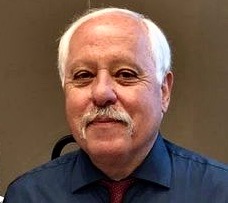
My association with University of Oregon athletics dates back to the 1960s, when the Ducks would play one of their big games of the year at Multnomah Stadium in Portland, usually against the University of Washington, Oregon State University or the University of Southern California. Occasionally, my Dad would take me to a Duck game at Hayward Field in Eugene.Both my Dad and my Mom had attended the University of Oregon in the late 40s, though both completed their college careers in Portland at the University of Portland and Marylhurst College respectively. My Mom moved back home to attend her sick father and my Dad found UP to be a better fit for his career as a high school science teacher.
When it came time to decide on a college, I considered such out-of-state journalism schools as the University of Missouri and Northwestern University, and came close to choosing the University of Colorado like my cousins. But due to economics and the fact that UO had one of the finest journalism schools in the country, I chose to stay in-state and moved to Eugene.
When I arrived at UO, Jerry Frei was the UO football coach, having succeeded the legendary Len Casanova (below) in 1967. Frei had been offensive line coach for Casanova, who had become the winningest Duck mentor of all time. When I (finally) graduated, Oregon had cycled through three more coaches. In short, the team struggled during my college career.
As I departed Eugene following graduation, a billboard on Franklin Boulevard announced: "The Dawning of a New Era" with a picture of Rich Brooks, formerly a coach and player at Oregon State University. For my five and a half years at UO, the school had four coaches. But soon, the Ducks saw progress, with winning seasons in 1978 and 1979.
When I returned to attend graduate school at UO in 1981-82 and 1982-83, the team relapsed into its old losing ways, precipitated by a pay-for-credit scandal, an illicit travel fund, and sexual abuse and misuse of phone cards charges against several players. The team was placed on probation for two years, and Coach Brooks tendered his resignation.
But then-UO President William Boyd refused his resignation and instead fired Athletic Director John Caine. The dark ages lasted for two years, culminating in a dismal 0-0 tie against Oregon State University. Dubbed the "Toilet Bowl," the game featured 11 turnovers and no scoring in a wild monsoon during the wettest year on record in Oregon. It was hard to watch.
In those days, 15-20,000 fans would attend Duck football games in the 43,000-seat stadium, and the place seemed empty. A few of us diehards could take up a whole row and have our feet propped on the row below and our elbows spread on the row above. "Do you think we'll ever go to a bowl game?" asked a friend. "No," I replied, "but if we do, we're going."
At one point, an Oregonian sports columnist critical of the University of Oregon for extending the contract of Coach Brooks wrote: "The fact is, both (Oregon and Oregon State) play in a league they can never -- NEVER -- hope to win. Brooks has become the symbol of it -- the Maharajah of Mediocrity, if you will. Why not consider playing at a (lower) level."
Then, in 1984, the Ducks recruited a local quarterback from Sheldon High School, Chris Miller, and along with a stout defense, started winning games. They stunned mighty UCLA in the Rose Bowl, 20-18. In 1985, the team found its way to a winning season. With Miller on to the NFL in 1986, Duck fans were ambivalent, and many feared another relapse.

But during the spring football game in 1987, a young freshman named Bill Musgrave emerged at quarterback, and after the Ducks won back-to-back home games against the Washington Huskies and USC Trojans, he helped turn the program around. In 1989, Musgrave let the Ducks to a 7-4 record and its first bowl game in 26 years in Shreveport, Louisiana.
Soon, I heard from my buddy. "We're going," he announced. It was short notice, but with help, we put together a package and were off to Louisiana. Stopping in Denver to change planes, we shuddered when we saw crews de-icing the jet with a pink substance, but soon took off for Houston. Fnding other Duck fans in the Houston airport bar, we joined them for a beer.
One inebriated Duck fan, clearly out of control, spouted off to a server and drew the manager's wrath. It wasn't long before the whole group of us was exiled from the bar by the management. As we left, the drunk Duck fan fired off one final salvo: "Fuck Houston!" he exclaimed with more than a hint of disgust. That phrase became our battle cry for the rest of our sojourn.
Arriving in Shreveport, the weather was freezing cold. We found a bar called "Fatso's Sports Bistro" and holed up until game time. At kickoff, the temperature was 10 degrees Fahrenheit. At halftime, the Fighting Ducks were down by two touchdowns. The situation looked grim.
Then, Bill Musgrave went to work. First, he connected with Tony Hargain in the end zone, and after a defensive stop, methodically moved the team down the field, running in the tying score himself. With minutes left in the game, kicker Gregg McCallum booted a game winning field goal and the Ducks defeated the University of Tulsa Golden Hurricane 27-24.
Afterward, temperatures hovered at 0 degrees Fahrenheit. My friend, looking at me with a sense of relief, notes: "How 'bout them Ducks?" Delirious fans stormed the field at Independence Stadium and slapped shoulder pads with Duck players and shook hands with coaches. From then on, our mantra became: "Fuck Houston. And how 'bout them Ducks?"
The next season, the team -- again led by Musgrave in his senior year -- finished 8-3 and were invited to the Freedom Bowl in Anaheim, a West Coast bowl that promised fun in the sun. This time, Duck fans flocked to the game by the thousands and, besides the game, the kids enjoyed the game's close proximity to Disneyland at Christmas.
The uptick would lead to more success for Oregon football, but the rise to the top would be ever-so-gradual. In 1994, Musgrave's successor Danny O'Neil, and another tough defense known as "Gang Green" would lead the team through the gauntlet of Pac-10 play. The watershed moment of the season would come against the #4 Washington Huskies.
The game was close, with the Ducks leading at halftime, 14-10. But as they have done before, the Huskies roared back to take the lead when freshman cornerback named Kenny Wheaton intercepted a sure Husky touchdown pass and ran it back for a pick-six to seal the game, sending the Ducks to their first Rose Bowl since 1958. Excited Duck fans from around the country flocked to Pasadena, California to see the team play #2-ranked Penn State.
After that "Dream Season," Coach Brooks resigned to take a head coaching position in the NFL and handed the reins over to Mike Bellotti, the team's offensive coordinator. But Duck football didn't miss a beat. Bowl games became the norm, with the team playing at various times in the Cotton Bowl, the Las Vegas Bowl, the Aloha Bowl, the Sun Bowl and the Seattle Bowl.
In 2000, the Ducks finished in a three-way tie for first place in the Pac-10 with the Washington Huskies and the Oregon State Beavers. They were invited to the Holiday Bowl in San Diego, the best bowl venue since the Rose Boal in 1994. Led by quarterback and future Heisman candidate Joey Harrington, the Ducks edged the mighty Texas Longhorns, 35-30.
The next season proved to be the apex of the team's gradual climb into the top echelons of college football. Again led by Joey Harrington, the Ducks won but had a number of close calls along the way. Ultimately, the Ducks were tripped up by the Stanford Cardinal to finish the regular season 10-1, good enough to be considered for the national championship game.
Unfortunately, the University of Miami had finished its season undefeated at sat at #1 in the polls. So the decision came down to BCS computers, which didn't weigh later games any more heavily that earlier games, and one-loss No. 4 Nebraska came out ahead of two-loss No. 3 Colorado and one-loss No. 2 Oregon. Nebraska would play Miami in the Rose Bowl.
The Ducks were relegated to the Fiesta Bowl for a game against the University of Colorado Buffaloes, which had beaten Nebraska in the Big-12 championship game. The Buffs would be favored agains the higher ranked Ducks. Instead, Joey Harrington, Maurice Morris, Onterrio Smith, Keenan Howry, Jamie Parker and a stout defense stomped Colorado, 38-16.
That season would go down as one of the best in Oregon football history, but there was more to come. The Ducks continued to be successful. In 2009, they returned to the Rose Bowl but lost to Ohio State. The next season, the team went undefeated and played in the national championship game, losing a tight contest to Auburn University, 22-19.
The next year, the Ducks retuned to the Rose Bowl. This time, they would not be denied, beating the University of Wisconsin, 45-38. In 2014, the team played in the BCS national championship series and won the Rose Bowl again in the semi-final game against Florida State, 59-20. University of Oregon quarterback Marcus Mariota won the Heisman Trophy.
The Ducks won another Rose Bowl against Wisconsin guided by future NFL quarterback Justin Herbert and have now been to bowl games in 20 of the last 21 years. The team traveled far from the "sad sack" days of the 1980s and the infamous "Toilet Bowl" (the last recorded scoreless tie in college football history) to establish a dynasty that continues to this day.
But now, sadly, the Pac-12 has come to an end, terminating the 108-year history of the conference. The trouble began with UCLA and University of Southern California becoming the first teams to leave the Pac-12 conference, announcing in summer 2022 that they would jump to the Big Ten in 2024. Soon, other members of the conference rushed for the exits.
The University of Washington and University of Oregon joined the LA schools in the Big 10 and Colorado, Utah, Arizona and ASU then fled to the Big 12, thereby decimating the Pac-12 Conference and leaving Oregon State and Washington State behind. Even Cal and Stanford left the conference in a head-scratching move to join the Atlantic Coast Conference.
Yet conference realignment is only part of the college football’s transmutation. The creation of the “transfer portal” and the ability to pay college players through “name, image and likeness” endorsement deals have also brought us to this new world of college sports. Through the transfer portal, college players can more easily seek transfers.
NIL money isn’t always the reason for a transfer, but with top college players, especially quarterbacks, it is the primary motivation. Throughout this past season, media pundits highlighted the irony of the 108-year-old Pac-12 being so stacked with talent in its final year. But the volume of top-level players in the conference should surprise no one.
Many have written about how a decimated Pac-12 will affect coaches and staff and “student athletes.” But what of the millions of people who have invested years as fans? These followers of college football understand that it was often less about Oregon State beating Washington or Washington State beating Oregon than their connection as fans.
So as the UO and other Pac-12 schools move into the brave new world of college sports, there's a palpable sense of shared grief over all that's been lost. Many will try to cling to those traditions that can still be saved and continue to be savored by fans. One thing is for sure, once a Duck, always a Duck (or Beaver, Husky or Cougar, depending on affiliation).