Friday, December 21, 2018

Year Of The Dog

Based on the Chinese zodiac, 2018 was the “year of the dog.” As those who know me will attest, dogs are my favorite creatures on the planet. Hence, it stands to reason that this past year was a fave -- with milestones, anniversaries and new arrivals of note. Not surprisingly, the dog is the eleventh sign in the cycle.

We all know that dogs are loyal, friendly and kind. My motto? "In dog we trust." But what does the year of the dog mean astrologically? According to dogtime.com, “Familial relationships will be of importance, and the year will be a year of hope.” So, without further ado, and with dog as my witness, here is the year in review.

The year began with the news that we would be expecting our first grandchild. In February, it was off to Astoria for the annual Mud Bowl. Took two road trips to Seattle, in March for a professional development tour with UO PRSSA, and April for the PRSA North Pacific District conference, with a side trip to the Owl Conservatory.


In June, it was “buon viaggio” as we departed for the Italian Riviera to celebrate our anniversary. Based in Genoa, we explored the Cinque Terre by boat en route to Portovenere on the Bay of Poets. Accompanied by our cab driver/interpreter extraordinaire Andrea, we also visited our Italian cousins, the Sanguinetis, in Isolona.

In July, GonzoPR passed 100,000 page views, thanks to readers like you. The most popular post this year? A book review of Order of Time by Italian physicist Carlo Rovelli, who uses a conversational approach in explaining complex scientific concepts like general relativity, quantum mechanics, cosmology and thermodynamics.

Rovelli untangles the most complicated advances in science, and explains the nature of time. His perspective on death caught my attention at the end of the book. “Death does not alarm me,” he wrote. “It did not scare me when I was young, and I thought at the time that this was because it was such a remote prospect.”

“The fear has yet to arrive. I love life, but life is also struggle, suffering, pain. Our fear of death seems an error of evolution. Many animals react instinctively with terror and flight at the approach of a predator -- a healthy reaction, one that allows them to escape danger. But it’s not something that remains with them constantly.”

“Fearing transition, being afraid of death, is like being afraid of reality itself; like being afraid of the sun. Whatever for? That is the rational version. But our lives are not driven by rational arguments. I would not wish to live as if I were immortal. I do not fear death. I fear suffering. Life is a precious miracle. We can smile now.”

The month of August would present a whirlwind of activity. For starters, we moved my father’s entire household from Oregon to Arizona, battling triple-digit heat and wildfires the whole length of the state of California on a road trip straight out of Dante’s Inferno. Later that month, we welcomed our first grandchild into the world.

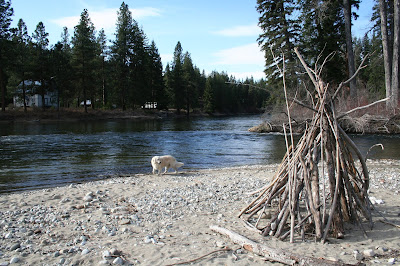
In September, we would squeeze in one more trip to the Owl Conservatory before the school bells would ring once again. Then, it was off to Austin, Texas for the 2018 Public Relations Society of America International Conference with the UO Chapter of the Public Relations Student Society of America in October.

As we approached the holidays, we celebrated a couple of milestones and are settling into our new roles as grandparents. As the “year of the dog” winds down, it turns out the predictions were true; it will be “a good year in all respects, but it will also be an exhausting year.” I’ll be doggone if they weren’t right.


Thursday, December 13, 2018

Man With A Plan

Inspired by a trip to Astoria last February for the Mud Bowl, I found “Astoria: Astor and Jefferson’s Lost Pacific Empire” by Peter Stark at the UO bookstore. A fascinating -- and at times, frightening -- tale, the book chronicles the exploration and settlement of America’s first colony on the continent’s West Coast.

In 1810, John Jacob Astor dispatched two advance parties -- one by ship around Cape Horn at the tip of South America and another by overland party -- to establish a base in the wild, unclaimed western coast of North America. More than half would die violent deaths. The others survived starvation, madness, exposure and worse.

Stark confirmed many things I already had known, but provided a veritable bounty of new information. What I knew: if not for Astor, the denizens of Oregon could have eventually become British, Canadian or even Russian, subjects. Once established, Astoria would become the first U.S. settlement on the Pacific Coast.


The overland expedition was only the second such transcontinental foray by Americans behind the Lewis and Clark expedition less than ten years earlier. The scale of his plan was mind-boggling. At this point in time, the wealth of the west lay in furs; there was no gold, no commercial fisheries, no wheat or timber harvested.

The expedition, supported by Thomas Jefferson and documented by none other than Washington Irving, would become the “largest commercial enterprise the world has ever known.” But “the grand venture” would exact a toll in lives and fortunes. It would also affect the ultimate configuration of America.

What I didn’t know: the early French settlers and fur trappers, known as “voyagers,” possessed a resilience despite their travails in the wilderness that the English decidedly lacked. While the Pilgrims grimly read their Bibles through long, dark nights, the French enjoyed feasts of game and wine accompanied by song.

Other learnings: Wilson Price Hunt, leader of the overland party, dubbed the loopy waterway they painstakingly traced westward the “Mad River.” We know it today as the Snake River, the largest tributary of the Columbia River, in turn the largest North American river that empties into the Pacific Ocean.

Finally, the incredible wealth of marine life supported a standard of living among Northwest natives in many ways superior to 18th century living conditions in London or New York: tightly built longhouses with post-and-beam construction and an abundance of salmon and other marine life -- oysters, seals, halibut, whales and much more.

Though ultimately doomed to fail, Astor’s bold enterprise served as the first push of American settlers across the continent: finding the route, establishing a presence and keeping the idea of settlement alive in the public consciousness. Without it, the U.S. might look quite different. A compelling read: highly recommended.


Tuesday, December 11, 2018

Route 66

Yep, I made it. Born on December 11, I have now survived my 66th year on the planet. Eleven, of course, has always been my lucky number. If you, like me, subscribe to the concept of numerology -- a belief in the divine or mystical relationship between numbers and events -- then you probably have a lucky number, too.

As a youth, I always wore the number “11” on all of my baseball, football and basketball teams. Eleven is also a prime number, so integers divisible by 11 also tend to be significant. This “life-path” number is determined by your birth date and is probably the most influential numerological aspect to be considered.

For me, the multipliers of 11 also tend to be significant. At 22, I graduated from college. At 33, I was hired in my career job at Eugene Water & Electric Board and we welcomed our second child. At 44, I was promoted into management at EWEB. At 55, I retired from EWEB and turned to full time teaching at the University of Oregon.

Now, in my 66th year, we celebrated our 40th wedding anniversary with a trip to Europe to visit our Italian cousins, helped move parental units from Oregon to Arizona, and witnessed the birth of our first grandchild back home in Eugene. Yep, as the old song goes, I was thankful to continue to “get my kicks on Route 66.”


Saturday, November 24, 2018

Magical Milestones

We met at a U.S. Forest Service fire prevention training session on the campus of Central Washington University in Ellensburg during the summer solstice in 1978. Three months later, we were living together at Lake Wenatchee. On November 25, we married at the Little Chapel in the Woods in Leavenworth during Thanksgiving Week.

Ten years later, with his older sisters anxiously awaiting, our son arrived by home birth during Thanksgiving dinner. Now 40 years hence, we celebrated our anniversary with a trip to Italy and welcomed our first grandchild. As Henry David Thoreau noted: “I am grateful for what I am and have. My thanksgiving is perpetual.”

Sunday, November 4, 2018

Jazz Master

Living at Lake Wenatchee in the late 70s, I first saw Pat Metheny at The Moore Theatre a couple blocks away from the Pike Place Market in downtown Seattle. I immediately became a true believer in his eclectic style of jazz guitar. This year, Metheny was recognized as an NEA Jazz Master by the National Endowment for the Arts.

A 20-time Grammy winner, Metheny and a talented group of musicians played a collection of his earlier works at The Shedd Institute in downtown Eugene last week. “I love playing Eugene,” he noted in a rare moment of conversation between songs. “You keep asking me back, even after 40 years.”

In addition to his long and distringuished career as a performer, Metheny has also taught music at the University of Miami and the Berklee College of Music in Boston. Playing for nearly three hours at The Shedd, Metheny covered a wide ranging opus from his catalog, which harkened memories from days of yore.


Sunday, October 28, 2018

Keynote Conversations

Over the years, the Public Relations Society of America has traditionally featured the best in keynote presenters at the organization’s annual international conference: Tim Russert, Arianna Huffington, James Carville and Mary Matalin, Jim Cantore, Soledad O’Brien and Mitch Albom, just to name a few.

The 2018 PRSA International Conference in Austin would feature marketing executive Jonathan Mildenhall, and economist and author Robert Reich. Their message? Public relations practitioners can be the torch bearers for truth, civility and humanity against the current backdrop of bellicosity that exists in this country.

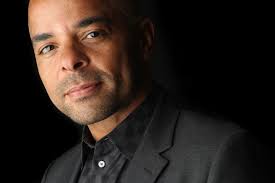
Mildenhall (above) noted that to have credibility with target audiences, strength of character is important. He credited his mother with instilling a sense of strong character and responsible performance. You must have a clear sense of purpose, he said. “Purpose drives performance; purpose is personal.”

Reich emphasized that “the reason I am excited to speak here today is because public relations professionals can help lead the way in creating meaningful dialogue. You have influence over the tone of the debate and civility is essential. You know how to listen and show respect for others. You can help overcome sources of distrust.”

A former Secretary of Labor in the Barack Obama administration, Reich noted the climate of contentiousness across the country is the direct result of political discourse that has grown too vitriolic, and incivility is the rule of the day.

As a result, “we are not communicating,” he says flatly. Reich highlighted three reasons for our current dilemma.

First, “tribal geography.” With more choice of where to live than ever before, he noted, we tend to live where people agree with us. “We need to break out of that constraint and embrace civil discussion. This country’s founders knew that democracy would only work if we reach out and engage with people who have a different point of view."

Next, “stagnant wages.” Reich noted that “the median wage has not changed in 40 years” when you consider the effect of inflation over the same time period. “Only 50 percent of millennials are doing better than their parents,” he said. For many, “the system is not working. It seems the game is rigged.”

Finally, "the media.” Reich, a prolific author (“once you put my books down, you can’t pick them back up,” he joked), pointed to a “diminishment of attention spans” and noted that “social media is easily manipulated. It’s easy to just tell partial facts or fudge the facts to distort the truth. It’s dangerous to democracy.”

Despite the seemingly untenable environment as we approach election day, Reich closed on an upbeat note to the approximately 2,500 public relations practitioners in attendance: “Trust is our most precious commodity, and people want a more civil discussion. Truth and civility should be the hallmarks of our society.”


Wednesday, October 24, 2018

Networking Nirvana

Though it may be viewed by some that networking in public relations is cliché, the practice nonetheless continues to reap rewards. Thus, the 2018 PRSA/PRSSA International Conference in Austin provided a plethora of opportunities to network among the hundreds of PR professionals and students in attendance.

With keynote addresses, breakout sessions, socials, mixers and more, the conference featured a target-rich environment for networking. Nonetheless, I like to remind students that the operative word in “networking” is “work,” which means you have to reach out to professionals and engage them.

The Internet provides plenty of data about individuals you can digest before you even meet someone. Common interests and mutual connections are usually a good place to start. LinkedIn is imperative, and for PR practitioners, Twitter as well. But don’t forget, these are just tools to get to the next level: a face-to-face interview.

Once you’ve added someone to your network, nothing is more effective in public relations than following up. Meet someone at a PRSA event? Circle back. Thank them for their time and interest in your career. As Maya Angelou said: "it’s not what you say or even did that people will remember, it’s how you made them feel.”

When it comes to social media, it’s okay to act like a human being, but always be professional. Actually, having a real personality can help develop your personal brand even more. Don’t throw caution to the wind, but it’s safe to say you can show your personal interests outside of what you do from 9 to 5.

A powerful networking practice is to provide immediate value to a new connection. This means the moment you identify a way to help someone, take action. Authenticity is who you are -- your honest reactions, your natural energy. When you know people, and those people know what you do, success knows how to find you.