Wednesday, December 3, 2008

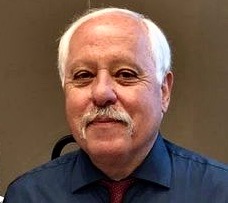
Mister Ducklips


The question is on everyone's (duck) lips; how on earth did I get the name "Mister Ducklips?"

Well, I'll give you the short version here. In the late 1980s, the University of Oregon Marching Band was looking for ways to raise funds for new band uniforms (those meager years before Nike stepped up to help the Ducks). Now, I had seen "duck calls" (noisemaking devices use to hunt ducks) in action at football games in the '60s and '70s, but someone had come up with a duck call shaped like a duckbill, hence the name "ducklips."

Seemed like a natural to me, so I picked up a pair and instead of losing my voice at Duck football and basketball games, I just used my ducklips. Never had a problem with anyone until our basketball seats were shuffled around to the southeast corner of McArthur Court in the late 1990s.

As the season proceeded, it didn't take long for the fellow seated right below me to express his displeasure at my use of the ducklips. Now, mind you, I only used my ducklips at the appropriate time during the basketball game: when an opposing player was at the free throw line, or when the opposing team had the ball on offense in a tight game. It's not like I blew the ducklips right into his ear, either. He simply couldn't abide the ducklips, and he asked me to stop.

The first time he asked, I politely told him that I would not refrain from using my ducklips, and our heretofore non-existent relationship deteriorated from there. He claimed he would call an usher to force me to stop with the ducklips. "Go for it," I replied. When that didn't work, he kept up his litany of complaints. "You know," I said, "if you really don't like the noise, maybe you can go home and watch the game on television."

This back-and-forth went on until I received a call from the University of Oregon Athletic Department. They had received a complaint from my buddy, the erstwhile Duck fan with the sensitive ears. The gal on the phone asked me: "did you know there's a NCAA rule forbidding the use of artificial noisemakers in member basketball arenas?" "You're kidding," I said. "I purchased those ducklips in the lobby at McArthur Court!" "Oh, right," she replied. Nice try, I thought, but I was not going to give up my ducklips that easily.

We were at an impasse, which continued through the end of the season. Months later, when it was time to renew our season tickets, I noted that my seats had changed, seemingly for the better, from the southeast to the northwest corner of Mac Court. However, my grandfather clause as a longtime season ticket holder was missing, which I knew was a mistake. You only lose the grandfather clause when you change your own seats, not when the UO Athletic Department initiates the change.

So I took my season ticket information over the the Casanova Center to straighten things out with the Athletic Department. As I explained to the gal at the ticket window about my situation, I could tell it was becoming a bit complicated for her, so she said, "just a minute, let me get someone who can help you." So another gal comes up to the ticket window and I start my story all over again.

As I'm telling her the story, a look of realization comes over her face and she exclaims: "Oh, you're Mister Ducklips!

Yes, ma'am, and the name stuck.

Tuesday, November 18, 2008

Broken Top

It's been five years since the lads -- Mark Grediagin, Bill Welch, Tom "T-Bone" Williams, Steve Still -- and I scaled that rotten piece of rock called Broken Top in the Oregon Cascades. 

It was late September 2003, and we were certainly pushing our luck, weather-wise. Markee, Steve and I had tried it before, from the east side. But that's a whole 'nother story. After a night of freezing our asses off, which was somewhat mitigated by the wine with dinner -- and the whiskey after -- we proceeded up the mountain to the point of no return -- Chicken Point.


Despite the cold temperatures, we persevered and reached the summit relatively early in the day, in plenty of time to catch the Duck football game on the radio on the way back down the mountain. The last little stretch of trail to the summit is a ledge about three feet wide, but with a precipitous drop of over 1,000 feet on either side, which can be a bit unnerving, particularly if you have vertigo.


Mountaineers everywhere generally agree: descending is much more difficult that ascending a peak. Footing is all important because the focal points become knees and ankles. In other words, it's best to take it slowly. In the AV clip below, we are beginning our descent.


Sunday, November 16, 2008

Aye, Chiwawa!

That's what the natives called the Chiwawa River Valley, which begins at the base of Chiwawa Mountain (above).

On one side of the valley is Chiwawa Ridge (below, in the background).On the other side is the Entiat Range, running from the Glacier Peak Wilderness (bottom) to the Columbia River, from high alpine terrain to desert lowlands.

The Chiwawa River Valley has a decidedly different climate and ecosystem compared to the valleys to its immediate west. It's dryer, with more sunny days and pine trees, and backcountry snows leave more quickly than the mountain country on the west side.


Wilderness Central


As you've read in these pages, the Owl Farm is located near Lake Wenatchee (above) at the junction of the Chiwawa and Wenatchee Rivers, just north of Plain, an unincorporated community about 14 miles north of the nearest town, which is Leavenworth, Washington.

Whenever I tell people that our family has property near Leavenworth, they sometimes ask, "why would you have a place in Kansas?"

"Well, Toto, it's because we're not in Kansas anymore," I reply. But we'll talk about Leavenworth -- the Bavarian Village -- later.

Back to the pastoral little commonwealth of Plain, Washington.

Plain can only be described as a quaint little valley in the heart of mountain country on the east side of the North Cascades. At the Owl Farm, we are virtually surrounded by wilderness.

The Alpine Lakes Wilderness lies to the south of Leavenworth, which originally was called "Icicle," until they decided to call the place Leavenworth after a former founder. Icicle Creek is a major tributary of the Wenatchee River, just like the Chiwawa River. Both streams begin at the base of massive glaciers in the Cascades of Washington. About 90 percent of the glaciers in the Lower 48 are in Washington.

If you're traveling to the Owl Farm, you have a number of ways to go. Here are the two most common.

From Seattle, take Washington State Highway 522 to Monroe, then U.S. Highway 2 over Stevens Pass to Washington State Highway 207 (the road to Lake Wenatchee) and follow the signs to Plain. If you're already on the east side of the Cascades, take U.S. Highway 97 to the junction of U.S. Highway 2 and follow the signs to Leavenworth. From Leavenworth, take Washington State Highway 209 to Plain.

Many thanks to The Seattle Times, my former employer when I contracted as a stringer covering North Central Washington, for the great graphic.

Friday, November 14, 2008

Wherever You Go, There You Are

I've taken to carrying a camera with me wherever I go, simply because you never know when you'll find one of those images that is truly hard to describe without a picture.

These shots were taken along the Beaver Valley Highway near Plain, Washington across the Wenatchee River from the Owl Farm. I came around the corner right after this little mishap occurred.

Not sure exactly how this big rig ended up like it did, but it looks like the driver went for a helluva ride. Once the rig came to rest, the driver popped out the cab without a scratch. Amazing!


Saturday, November 8, 2008

My Close Encounter with Mitch Albom

Mitch Albom, author of the best-selling "Tuesdays with Morrie," was scheduled to be the keynote speaker on the last day of the PRSA International Conference, which fell on a Tuesday (appropriately). Arising early to secure a good seat at his presentation,

I asked one of the attendants for directions, and she pointed the way. I must have been the first one there, though a few other people trickled in.

I was feeling pretty good because I had a front row seat amongst hundreds of chairs in a huge auditorium. After a while, the attendant came back into the room and told the few of us seated that Albom's keynote address was actually in another room.

"Shit," I thought to myself, "I've probably lost my front row slot." Not to worry. I made haste to the next level and found another front row seat.

As anticipated, Albom's address was compelling: his repartee was funny, poignant, witty and sad, everything I expected it to be.

Afterward, I hustled to get a place in line for Albom's book signing. But once again, I got side-tracked onto another floor of this confusing hotel (The Detroit Marriott at the Renaissance Center), which is listed in Wikipedia as the largest in the Western Hemisphere. By the time I found the correct location, the line was already curling out of sight.

Fortunately, the queue moved along quickly, much like the lines at Disneyland. When I reached the front, he signed the inside flap of his book "For One More Day" (another fine piece of writing) and asked if I wanted it addressed to me by name.

"Yes, I replied, "and could you add 'Go Ducks?''

"Absolutely, you from Oregon?" he queried.

I nodded. Then he added, "You know, I really like Joey Harrington (former Duck quarterback who had a less-than-successful experience playing for the Detroit Lions)."

"You're probably the only one in Detroit who does," I replied, adding "I like him, too."

He smiled.

Motown Musings

As chair of the North Pacific District of the Public Relations Society of America (NPD PRSA), I recently attended the PRSA International Conference in Detroit, Michigan. The event was held in the Detroit Renaissance Center, which serves as headquarters for General Motors and also includes a huge conference facility and hotel, the Detroit Marriott. The hotel, which soars 73 stories above the Detroit River (above, top), is a stunning presence on the city's skyline.

A notorious multi-tasker, I'm also the faculty advisor for the University of Oregon chapter of the Public Relations Student Society of America, which has its annual national conference in conjunction with the PRSA International Conference. Here's a group shot of me and this year's UO PRSSA executive team (bottom) at the PRSA/PRSSA Social in front of a classic '55 Chevy.

One of the keynote speakers at the conference was Mitch Albom, sports columnist for the Detroit Free Press. For those of you who don't follow the wide, wide world of sports, Mitch (gotta like that name, no?) is one of the premier sports journalists in American today. At the NPD PRSA District Conference in Portland last May, I came up lucky in a raffle drawing and won his book "Tuesdays with Morrie," Albom's chronicle of time spent with a beloved but dying professor.

I saved the book for the plane ride from Eugene to Detroit and I must say I was profoundly affected by the revelations and learnings I gleaned. One of the key themes in Albom's memoir is how we seemingly waste our time on things that really have little or no significance in our lives:

"I flew to London...covering Wimbledon, the world's premier tennis competition and one of the few events I go to where the crowd never boos and no one is drunk in the parking lot. Outside the gate was a newsstand that sold a half dozen colorful British tabloids featuring photos of topless women, paparazzi pictures of the royal family, horoscopes, sports, lottery contests and a wee bit of actual news."

"People scooped up these tabloids, devoured their gossip, and on previous trips to England, I had always done the same. But now, for some reason, I found myself thinking about Morrie whenever I read anything silly or mindless. I kept picturing him there, squeezing out every moment with his loved ones, while I spent so many hours on things that meant absolutely nothing to me personally: movie stars, supermodels, the latest noise out of...Madonna."

"In a strange way, I envied the quality of Morrie's time even as I lamented its diminishing supply. Why did we bother with all the distractions we did. Back home, the O.J. Simpson trial was in full swing, and there were people who surrendered their entire lunch hours watching it. They didn't know O.J. Simpson. They didn't know anyone involved in the case. Yet they gave up days and weeks of their lives, addicted to someone else's drama."

"I remember what Morrie said during our visit: 'The culture we have does not make us feel good about ourselves. And you have to be strong enough to say if the culture doesn't work, don't buy it.'"

"I thought of something else Morrie had told me: 'So many people walk around...half-asleep, even when they're busy doing things they think are important. This is because they are chasing the wrong things. The way you get meaning into your life is to devote yourself to loving others, devote yourself to your community around you, and devote yourself to creating something that gives you purpose and meaning.'"

"I knew he was right."