Thursday, March 15, 2012

Puppy Love

On Thursday, March 15, we picked up our new puppy in Florence on the Oregon coast at the Sand Dunes Golden Kennel, just about a month to the day we lost Carmen to a heart tumor. The new pup is an English Cream Golden Retriever imported from European stock.

Gina, Rebecca and I made the trek to Florence and, after a tasty seafood lunch at Mo's on the Siuslaw River, we proceeded to the kennel, near the Oregon Dunes National Recreation Area. The breeder had two litters to choose from, but most of the 15 puppies were boys.

Luckily, we were on the lookout for a girl, so it made choosing a wee bit easier because frankly, they all kind of looked alike.

Because she had the audacity to come up and untie both of my shoes when we first met, we selected the one known as "red collar girl" from among the two litters of golden retrievers.

For all intents and purposes, she chose us, and it would have been futile to resist her spunk and charm.

As a result, we're calling her "Moxie." The dictionary defines "moxie" as "vigor, verve, pep, courage and nerve." She certainly has all of those qualities and much more.

And, as you can tell from the photo below, we already have her trained to attack the beaver toy. Some things never change.


Friday, March 2, 2012

Alpine Adventure

Booked passage to Zurich (above) for late summer, 2012. I've always wanted to tour the Swiss Alps and see the Eiger, the glacier-encrusted monolith that serves as the focal point of the Clint Eastwood professor-cum-assassin-cum-mountaineer yarn: The Eiger Sanction. Daughter Gina will join me on this alpine adventure.

Leaving Eugene on August 22, I'll arrive in Amsterdam the next day, followed by a quick flight to Switzerland. Frequently cited as one of the most livable cities in Europe, Zurich began as a Roman encampment called Turicum before joining the Swiss Confederation.

Today, Switzerland's largest city is undeniably hip with a grungy, wacky freedom that one might associate with Munich or Genoa. Once in Zurich, I'll hole up at The X-tra, a three-star hotel in the city's old town. When I have my bearings, I'll tour the city before disappearing into the hinterlands of the Swiss Alps.

First stop: the Bernese Oberland, the heart of the Swiss Alps, including the Jungfrau region near Grindelwald to view the "big three" peaks, the Eiger (above), Monch and Jungfrau (Ogre, Monk and Virgin). All have an enduring place in mountaineering lore, particularly the Eiger, whose fearsome north face has claimed many lives and remained unconquered until 1938.

Also plan to see Interlaken, an alluring isthmus straddling the crystalline lakes of Thun and Brienz, as well as Lucerne, where the city's cobblestone streets, slender spires and fresco facades evoke the classic storybook image of a Swiss village.

If I have time, I'll take a side trip to Liechtenstein, a tiny principality about the size of Manhattan on the eastern border of Switzerland. Like it says in Lonely Planet: Switzerland: "if Lichtenstein didn't exist, somebody would have invented it."

It resembles many small duchies conjured up in fiction and film, like in The Mouse That Roared: the little country that declares war on the United States hoping to lose for the foreign aid. Most come to Lichtenstein to say they've been there. After thoroughly exploring Zurich (below) and environs, I may as well.

Tuesday, February 14, 2012

Canine Companion

After a brief illness, Carmen -- our beloved golden retriever -- succumbed to a heart ailment on Sunday, February 12, just short of her eighth birthday in April.

On Groundhog Day, Carmen collapsed and we rushed her to the nearby animal hospital, where we learned she had an enlarged heart. The vet suggested we take her to the Oregon State University Veterinary School for a more definitive diagnosis, so the whole family jumped into the car and rushed to Corvallis, about an hour drive from Eugene.

After several hours, we learned that Carmen had an inoperable tumor on her heart and that she had a few days to a few weeks to live.

Bad news, to be sure, but I must say that the cardiologist and her staff were wonderful -- very professional and muy sympatico.

For the next week and a half, at least one family member was with Carmen at every moment. Other than having a little less energy than usual, she seemed quite normal. Her ailment did nothing to diminish her appetite, and she was attentive and alert.

We continued to do the things we always do, taking walks at the fairgrounds and enjoying each other's company. Alas, on Sunday, she laid down outside, clearly not feeling well. We rushed her to the emergency clinic, where she died a few hours later.

Someone had commented that we didn't seem to have much luck with dogs. On the contrary, I thought, I've had better luck with dogs than with some people I know. Indeed, the average dog is a nicer person than the average person, and canines are unconditionally loyal.

We had a great run together, and we miss Carmen terribly, but we know she is no longer in pain. She came into our lives when we really needed her love and affection. For that, we will be forever grateful. Good-bye, old friend.

As Darwin said: "it is scarcely possible to doubt that the love of man has become instinctive in the dog." Or this, from an unknown author: "I hope to be the kind of person my dog thinks I am."


Thursday, January 5, 2012

Rose Bowl: Denouement

Faithful readers, the opportunity for an afterword on the first Rose Bowl victory by the University of Oregon Ducks football team in almost 100 years was simply too much to resist, an itch I had to scratch.

True story: after nearly a century of futility, the Ducks beat the University of Wisconsin Badgers in the "granddaddy of them all, with the game in doubt until the very end. For perspective, the Ducks last won the Rose Bowl when my "granddaddy" -- C.W. Mitchell -- was 17 years old, about the age of the lads on the winning team (below).

Think about it. The last time the Ducks won the Rose Bowl in 1917, the team wore leather helmets. Today, the only place you see leather headgear is on the fashion show runway. Even back then, leather helmets were only good for protecting your ears from stupefying pain after being hand-smacked on a freezing cold day.

After beating the University of Pennsylvania in 1917, the Ducks lost a nail-biter with Harvard University in the 1920 Rose Bowl. They would not return for another 38 years. In 1958, legendary UO Coach Len Casanova (below, autographing young Jory's football) led the Ducks to a near upset of the prohibitive favorite, Ohio State University.

Fast forward another 37 years to their next appearance, the "dream season" that culminated in the 1995 Rose Bowl. This time, the Ducks hung tough for a half, but ultimately lost to Penn State University, a team that finished the season undefeated and #2 in the country. Two years ago, the Ducks lost again to Ohio State University, 26-17.

This year, the stars finally aligned and the University of Oregon prevailed in what is unarguably one of two most gratifying games in Duck football history. The other is the 2001 Fiesta Bowl (below, with some of the Mitchell clan in front of Sun Devil Stadium), when Joey Harrington led the Ducks to victory over the University of Colorado Buffaloes and a final ranking of #2 in the nation.

So, in honor of the Rose Bowl victory, I offer a toast to all loyal -- and in some cases, long-suffering -- Duck fans everywhere. Bottoms up!

Tuesday, December 27, 2011

Granddaddy Of Them All

After a fantastic season that would rival last season’s unprecedented success, the University of Oregon Ducks football team returns to the Rose Bowl -- the granddaddy of them all -- after a two-year hiatus to face the University of Wisconsin Badgers on Monday, January 2.

Finishing undefeated in the Pac-10 last year, the Ducks lost a close contest to Auburn University, 22-19, in the BCS national championship game at the Fiesta Bowl in Phoenix, Arizona in January, 2011.

This season, the Ducks lost their opener to perennial power Louisiana State University (this year's #1), sustaining minimal damage to their hopes for another BCS berth, thanks to a respectable defeat to a highly ranked team from the SEC.

Nearly running the table after that, save for a tightly-contested setback to USC, the Ducks won 10 of their next 11 games and pummeled UCLA in the inaugural Pac-12 championship game and the right to represent the league in the Rose Bowl.

As a longtime season ticket holder, I was able to secure two seats for the pageant in Pasadena (right) for my Dad, Ralph Mitchell, and his wife Florence. They will attend the game on their way back to Sun Lakes, Arizona for the winter.

As for me and mine, we'll be watching the Rose Bowl intently on the tube, and I'll be seeking occasional counsel from the Duck deity (below) during the contest. A Christmas present from EWEB buddy Paul Emmel at our department's annual gift exchange, the retro decanter comes with easy-to-follow instructions.

"How to use the Duck deity: 1) fill with whiskey; 2) rub head; 3) pray for turnovers; 4) drink contents; 5) proceed to game; 6) repeat #1 and #4 if losing in the third quarter." The best-case scenario? I won't need to repeat any steps, of course. Go Ducks!

Monday, December 26, 2011

Pasco Pilgrimage

Took our last road trip of 2011, a pilgrimage of sorts, to the Tri-Cities in Washington State to visit with Rebecca's brother Doug and other family members who live in the area from December 18-22.

Tri-Cities resides at the confluence of three major Northwest waterways -- the Columbia, Snake and Yakima Rivers. Together, the cities of Pasco, Kennewick and Richland comprise the third largest metropolitan area in Washington behind Seattle-Tacoma and Spokane.

Because the trip is over 300 miles -- or about six hours by car from Eugene -- we stopped in Hood River to break up the drive. We stayed at the usual spot on trips to our property near Lake Wenatchee, the Sunset Hotel, a dog-friendly facility where the views of Mt. Adams (above) are evident from every room.

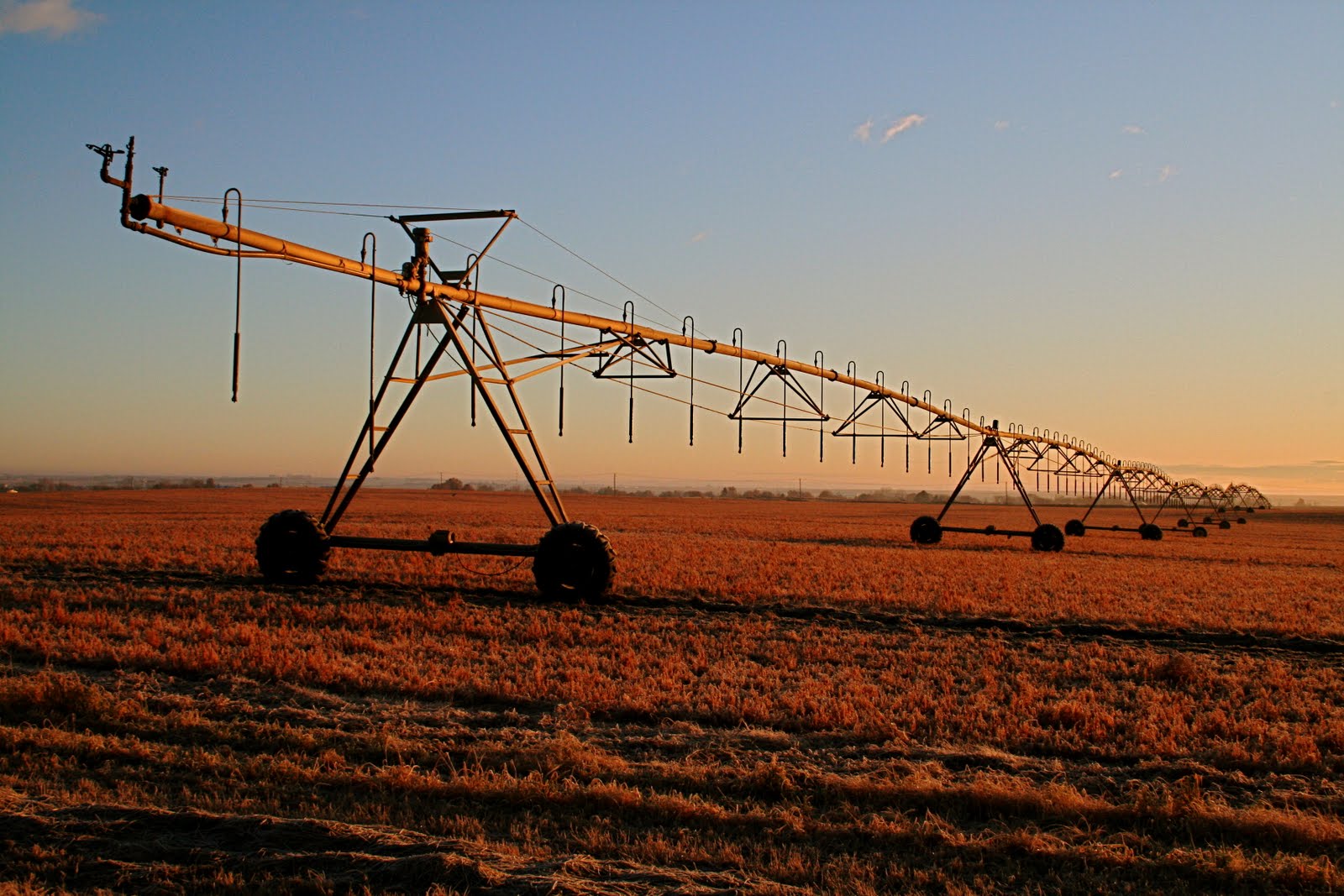
Rebecca grew up in Kennewick (population 73,917), but Doug lives in Pasco (population 59,781), and Becky also has family in Richland (population 48,058). Doug recently moved into a new home adjacent to farmland that stretches as far as the eye can see (below).

Despite the influence of the nearby Hanford Nuclear Site, agriculture remains a big part of of virtually every sector of the economy in Tri-Cities, particularly Pasco. Potatoes, wheat, apples, corn, cherries and asparagus are just a few of the commonly grown crops, thanks to the excellent soil and abundant irrigation from the three nearby rivers.

The area also has a burgeoning wine industry, with more than 160 wineries within an hour's drive. The semi-arid Tri-Cities, which resides at the same latitude as the Burgundy and Bodeaux regions of France, is known for its high-end premium wines. The Columbia Basin's volcanic soil, along with hot summer days and crisp, cool evenings, create conditions for making great wine.

Carmen, our beloved golden retriever, enjoyed long walks in the potato patches and hay fields north of Pasco, where she stalked the elusive field mouse (below).

On our return trip, we stopped in Portland for Christmas dinner with the Mitchell clan at the Bridgeport Brewery in the Pearl District. When all was said and done, it was a delightful holiday caravan, with dry roads and great company to end the year.


Tuesday, November 29, 2011

Standing With The Hat

The big news around these parts is that University of Oregon President Richard Lariviere has been fired "without cause" by the state Board of Higher Education and -- for all intents and purposes -- Governor John Kitzhaber in a major showing of no confidence.

The day after Thanksgiving, with nary an attempt at transparency, the board scheduled a meeting on Monday, November 28 to discuss the apparently predetermined "finis" of the popular Lariviere. The tactic was an ingenuous ruse at best, and a public relations disaster for state government at worst. Campus was closed on Friday and most associated with UO were enjoying the four-day weekend.

When news surfaced about the Monday meeting in Portland, the antennae of conspiracy immediately sprouted on the UO campus. My UO email in-box overflowed with outraged yet well-reasoned prose opposing his termination by members of the greater UO community.

Calls to retain the UO president and disband the board reverberated around the campus. Saddled with a barrage of digital communication, it was hard for me to discern the desperate pleas of mercy from students seeking an extended deadline on an assignment.

Shocked like many others in the UO community, it wasn't a question of whether I had a dog in this fight, but how many.

As a UO alum, I've observed with heightened concern over the diminishing state support for higher education over the past 30 years. The State of Oregon now provides less than 7 percent of the funding for the University of Oregon. It's hard to maintain "excellence" when the fiscal noose continues to tighten, squeezing the life out of my alma mater like a python strangling its prey.

Yet despite continued reductions in state support, the UO has survived and -- indeed -- thrived, thanks in part to Lariviere. Enrollment and fundraising are at an all-time high, and Lariviere has a vision and a talent for inspiring others on campus to strive for an even better University of Oregon.

As a longstanding part-time employee of the University of Oregon, I've seen talented faculty recruited by other, more well heeled universities because of below market compensation policies, particularly when compared to faculty at other public institutions. Quality of life only takes you so far. Lariviere knows this and recently awarded $5 million in pay raises to 1,300 UO faculty and staff.

As a consumer who has helped put his kids through UO, I've witnessed increasing tuition rates to help compensate for the loss of funding from the state. Backed into a corner, the UO has established a business model that utilizes out-of-state and international student tuition rates to balance the budget. In-state tuition is less but continues to rise faster than the consumer price index.

The University of Oregon currently receives less money from the state per capita than any other public university in Oregon.

It's not a pretty picture, and no matter how you slice it, the state has withdrawn its investment in higher education.

Lariviere's "New Partnership" initiative sought to address the shortfall and bring greater financial autonomy to the UO.

My personal experience with UO President Richard Lariviere is strictly anecdotal, though he has impressed me as someone I would want on my team. The first time I met the man was on my path to school one morning. Passing him on my way to Allen Hall, he tipped his ever-present fedora and smiled: "good morning." As a humble adjunct faculty member at the UO SOJC, I was immediately impressed.

My next encounter was the result of an impromptu photo shoot during the parade last January to honor the Ducks for their stellar football season. I shot a number of pix and posted them on Facebook; his wife, Jan Lariviere, spotted one of my images of her husband and asked to be my "friend" on the social networking site. Later, Richard himself would "friend" me (has "friend" become a verb?)

When Lariviere was informed that his contract would not be renewed, he sent all faculty, staff and students an email: "I received news on Monday in a meeting with the chair of the state Board of Higher Education that my contract at the University of Oregon will not be renewed. I was told that I could resigned or accept the termination of my contract (in July, 2012). I am weighing those options at this time."

Clearly, he had irked the board, an antiquated and ineffectual -- and in this case draconian -- body of volunteers, as well as Governor John Kitzhaber, for "not being a team player" and for pursuing his own agenda of a more independent University of Oregon.

Unfortunately for the board, its back-alley effort to terminate Lariviere over the Thanksgiving holiday weekend backfired. The local community and many others rallied behind Richard Lariviere with a grassroots "We Stand With The Hat" campaign in an attempt to force the board to retain the UO president.

A rally and teach-in was scheduled for Monday on campus, and support for the president was pervasive at the annual Civil War football game between Oregon and Oregon State at Autzen Stadium on Saturday, November 26. UO alum and Nike founder Phil Knight likened the board's impending action against Lariviere as a "bad decision" that seemed to resemble an "application of Oregon's assisted suicide law."

On Monday, a large contingent of UO faculty, alumni and students packed the room at Portland State University in a two-hour public meeting that can only be described as testy, volatile and emotionally wrought. "It was quite warm in that room, over 100 degrees," noted eyewitness Loren Ruark, a KVAL-TV cameraman and friend who observed the resulting fireworks. He may have been only mildly exaggerating about the temperature: "it was hot," he added.

The efforts of supporters would not be enough; the state Board of Higher Education fired Lariviere for "frayed relationships" and "broken trust." Response was instantaneous and harsh: board members were met with jeers and boos as they attempted to explain their positions.

If anything, the abrupt dismissal of Richard Lariviere has only fanned the flames of efforts to support the UO's quest to survive.

And, in a case of 20-20 hindsight that can only be described as a "make up call" in sports parlance, the board has appointed Lariviere's part time assistant Robert Berdahl -- a former University of Oregon professor and dean -- as interim president, a clear showing of deference to the greater UO community.

As for Lariviere, stay tuned. As a tenured professor in Sanskrit, we may continue to see "the hat" on campus for some time to come.