Wednesday, May 17, 2023

Stumptown Soiree

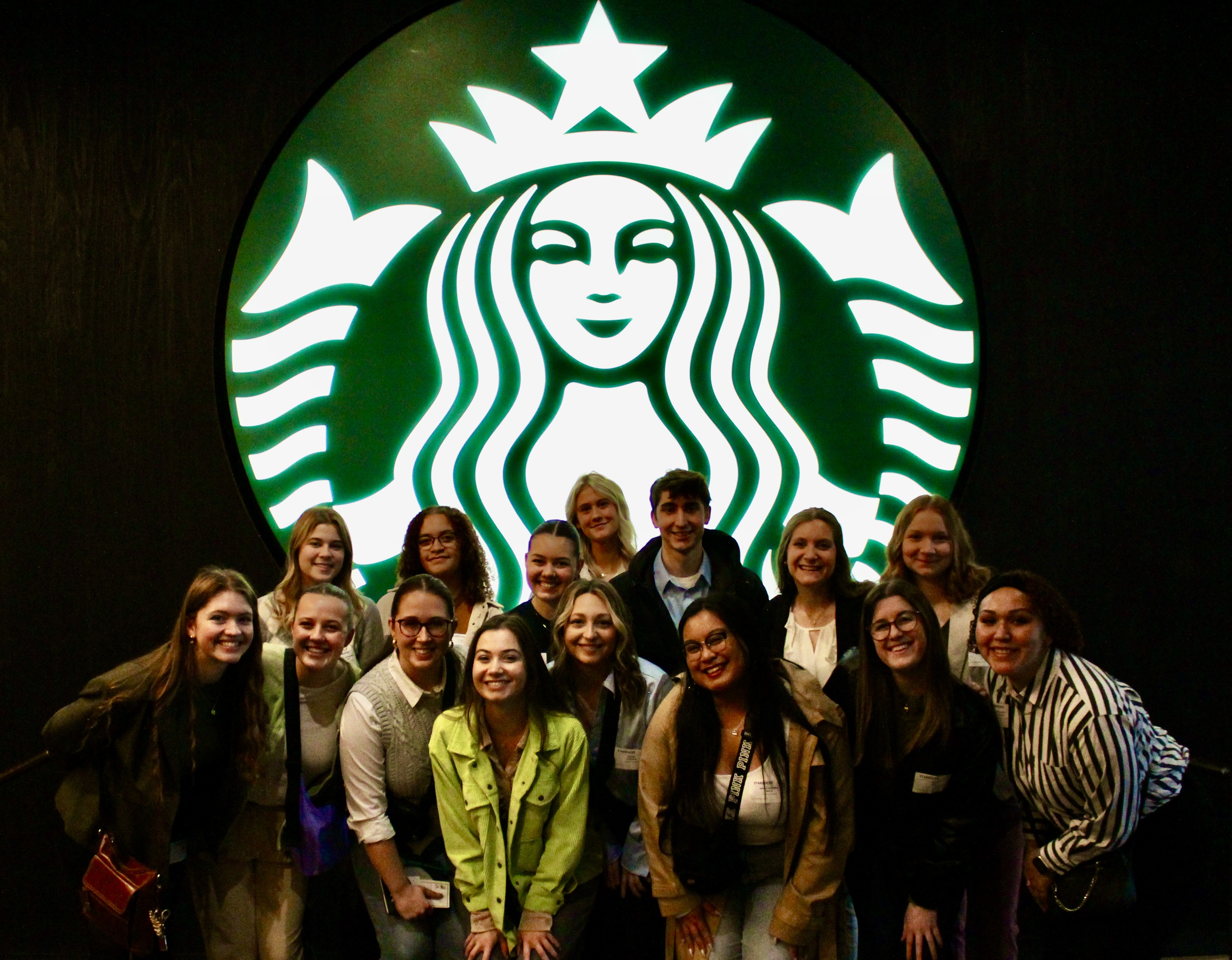
The University of Oregon Chapter of the Public Relations Student Society of America hit the road once again for its second professional development tour of the year, this time in Portland. Joining the group as UO PRSSA professional advisor, we toured Edelman, Gard Communications and the Portland Timbers and Portland Thorns soccer teams.

The tour started at the Portland office of Edelman public relations/marketing with an discussion led by Account Supervisor Casey Olsen, a University of Oregon SOJC graduate in the public relations sequence and former programming director for UO PRSSA. There, we were joined by my fellow PRSA Oregon board member, Dianne Danowski Smith.

Next up, we visited Gard Communications, an agency specializing in corporate and public policy communication. I reconnected with my former students Hannah Smith Perreault and Liz Vargas, now both working as account managers at Gard. Since 1979, Gard has become one of the Northwest's most respected creative, digital and public relations firms.

The final stop on our tour was Providence Park, home of the Portland Timbers and the Portland Thorns, the popular professional men's and women's teams. The park is adjacent to Lincoln High School, my alma mater, where I played varsity baseball. Known as Multnomah Stadium back then, the park served as the home field for the Lincoln Cardinals.

Here, we received an extensive tour of the facility from UO SOJC public relations graduate Kacie Van Stiphout and learned about the dynamic world of professional sports teams from Collin Romer and Brian Costello, who provided insights into life as a communications professional in the wide, wide world of sports. Overall, it was a most memorable day.


Sunday, April 16, 2023

Failed Coup

Moving to Eugene from Portland to attend the University of Oregon in the early '70s, I rented in Springfield before settling just west of campus in what's known as "Midtown Eugene." Returning later as a graduate student with a family, we settled in the same neighborhood.

Later, the City of Eugene formed neighborhood groups to connect residents and we became part of the "Jefferson Westside Neighbors." The neighborhood includes homes and businesses between 13th Avenue and 18th Avenue and Willamette Street to Jefferson Street.

The area is an eclectic mix of university students, seniors and young families, with commercial enterprises of all shapes and sizes. The Jefferson/Westside Neighbors is a nonpartisan entity directed by volunteers who have the time and energy to contribute to activities in the neighborhood.

Soon after arriving in town, I learned that Eugene was a mecca for all stripes of activists ready to support any worthy cause or protest any injustice. While that perception still holds true, it's also a fact that neighborhood groups struggle to fill board positions to carry out their mission and goals.

As is typical this time of the year, another election was on the docket and the Jefferson Westside Neighbors scheduled the activity for its April meeting. Just enough volunteers agreed to run for board positions as usual. Until last week that is, when I received a tip from a neighbor.

"We have discovered that an alternate slate of candidates is intending to run unannounced and if you appreciate the service and job we have done, it is critical that you show up and be heard. The outcome should not be decided by a small group" who has organized their own voting bloc.

"While certainly more people running is better and many neighbors could do the job, this group has not contacted the JWN to find out what is involved, so we could not list them or prepare the online ballot. The fact that none of these folks has reached out is a huge red flag."

"The danger is a small group can mobilize their friends and, if the turnout of other neighbors is low (since the slate has been posted as uncontested), can effectively take control of the neighborhood association." While that is certainly politics, the approach is neither transparent nor inclusive.

The board chair contacted the rouge group known as JWN For Everyone, which eventually prompted a public declaration for the open board positions. Their reply: "Please consider this 'our announcement.' Our understanding was and continues to be that all seats can be nominated from the floor."

Meanwhile, their true intent was posted on a Reddit site. Addressed to the neighborhood, they noted: "We have the opportunity to build a new neighborhood association. The entire executive board is up for election and (we have) a slate of folks to take the JWN in a new direction."

Further learnings indicated that the group known as JWN For Everyone was clearly organizing a hostile takeover of the board. Subsequently, both sides appealed to their constituents to turn out and vote for their candidates either in person at United Methodist Church or via Zoom.

In the end, the election was "quite a circus," according to one neighbor. JWN For Everyone was "nasty and uncivil, spouting tropes of all varieties," including painting current board members as "fascists. Their leader seemed unhinged, and touted his membership in the Socialist Party."

"Apparently, they view neighborhood associations as tools of capitalism," the neighbor continued. "None of them has been to meetings, volunteered on committees or shown up at work parties. They clearly intended to decommission the existing neighborhood association."

The contentious election "attracted a record number of voters," noted another neighbor. "With the Zoom feed, many more people participated than usual, but the room itself was packed nonetheless. We had a mind-blowing 200 or so votes for each seat." In the end, the rebel cause fell flat.

The attempted coup d'etat "mostly fizzled," said one neighbor who witnessed the spectacle. (Only) "one of the seven (candidates from JWN For Everyone) won, (but that candidate) promptly resigned when she realized that none of her comrades were elected."

While reason ultimately prevailed, the board clearly has work to do, including revising its by-laws to prevent such a nefarious intervention in the future. Participation in neighborhood associations is undeniably a good thing, but open communication is vital to its success.


Saturday, March 25, 2023

Duck Rant

Editor's Note: As a longtime Duck basketball fan, and in response to recent news/editorials in The Oregonian lamenting the lack of attendance at games, I sent the following email to Rob Mullens, the University of Oregon Director of Athletics.

"As a Duck basketball season ticket holder, I was disheartened to read in The Oregonian that Dana Altman, whom I consider a great coach and one of the best hires ever, was so frustrated after the NIT game against Wisconsin that he took way too much responsibility for the lack of fans in the stands.


While appreciating Dana as a stand-up guy, the actual reasons for the dearth of fans at the game extend way beyond the performance of the team or the coaches. The UO Athletic Department should become more circumspect and consider the real issues for poor attendance numbers at men’s games: lack of parking, overpriced tickets and too many late games.


Let’s start with the the severe lack of parking. Clearly, the parking allotment underneath Matthew Knight Arena is woefully insufficient to accommodate the number of fans in a full -- or even partly full -- arena. Furthermore, street parking has for all intents and purposes been banned by a shortsighted and draconian Eugene City Council.


To add insult to injury, city parking police monitor the neighborhoods near the arena and pounce on unsuspecting fans with expensive parking tickets. Fans also have the option of paying for parking at the limited number of lots available nearby, but that adds to the cost of the experience.


Speaking of cost, the men’s basketball team has been a victim of its own success, as witnessed by increased ticket prices over the years. By comparison, tickets for women’s basketball are much more reasonably priced, and they seem to be attracting decent crowds for their NIT games.


Whatever happened to Bi-Mart two-for-one tickets? The UO Athletic Department should devise more creative ways to price tickets in the interest of attracting more fans.


Another key detriment to attendance has been the sheer welter of late games, with 7-8 p.m. start times effectively putting a damper on attendance. How many fans from Portland, UO’s largest alumni base, are willing to spend 4-6 hours on Interstate 5 on game nights, especially when they can watch the contest on television? 


Admittedly, the coronavirus pandemic hasn't helped with attendance over the last few years, but attendance at men’s basketball games, in stark contrast to the women’s basketball games, is not demonstrating resiliency.


Dana Altman is not the problem. He is a Hall of Fame coach-in-waiting who recruits well and has won consistently. I hope he will remain at Oregon for many years to come.


The athletic department needs to develop new approaches to address the real issues for the lack of attendance: provide more parking options and get creative with sliding-scale ticket prices and scheduling of game times.


As always, go Ducks!"


Wednesday, March 1, 2023

Vanishing Point

The largest glacier between the high volcanic peaks of Mount Rainier and Glacier Peak has finally disappeared after a long battle with global warming. For thousands of years, the Hinman Glacier graced the crest of the Washington Cascades in the Alpine Lakes Wilderness.

Fifty miles due east of downtown Seattle, Mount Hinman sits deep in the Alpine Lakes Wilderness, midway between Snoqualmie Pass and Stevens Pass. Until recently, the Hinman was one of four named glaciers that provided cool water to the Skykomish River in the hottest, driest time of the year.

The glaciers of the Skykomish basin have lost 55 percent of their surface area since the 1950s. As Hinman Glacier dwindled in recent decades, late-summer flows diminished in the Skykomish River, bad news for salmon and farmers. The glacier was ancient, though how ancient is unknown.

In the 1950s, the Hinman Glacier flowed a mile and a half from the broad top of 7,492-foot Mount Hinman to the valley floor nearly 2,000 feet below. Mount Hinman gained protection from direct human disturbance in 1976 when it was designated part of the Alpine Lakes Wilderness.

But Hinman’s snow and ice were no match for the rising temperatures of the fossil fuel era. In 1958, the Hinman Glacier covered 320 acres, about half the size of Seattle’s Lake Union. In August 2022, the biggest patch of ice found was about 10 acres — too small and too thin to flow.

Glaciers are rivers of ice that flow from year to year, as their own weight compresses snow into ice. Most include striking features like deep crevasses and deep-blue ice, sculpting the land beneath them as they go. Two other glaciers on Mount Hinman, preceded the Hinman into oblivion.

The rounded peak and the glacier on its northwest side were named for Everett dentist and mountain climber Harry B. Hinman in 1934. He started the Everett branch of the Mountaineers in 1911. Few ever touched the Hinman Glacier, reachable only by off-trail scrambling and mountaineering.

Visiting the site in 2009 while hiking the Pacific Crest Trail from Stevens Pass to Snoqualmie Pass, we found the area to be magical. The Hinman Glacier touched many people by keeping the Skykomish River cool and flowing each summer and providing water. Sadly, however, it is now gone.


Wednesday, February 1, 2023

Beyond The Blip

Much like "the blip," the missing years featured in The Avengers: Endgame by the Marvel Cinematic Universe, the coronavirus pandemic disrupted the world. The Public Relations Student Society of America was no exception, with two-plus years of "virtual" events for students using Zoom to keep the ball rolling on their education, professional development and networking opportunities.

But last month, the UO Chapter of PRSSA boldly scheduled a professional development tour in Seattle, with plans to visit WE Communications (photo above), InkHouse Public Relations, Starbucks and The Fearey Group. Joining the sojourn as the group's professional advisor, we all departed Eugene, and after a long delay caused by an accident on I-5, we arrived in Seattle after a brutal nine-hour drive.

The professional development tour kicked off at WE Communications, formerly known as Waggener/Edstrom and founded in the early 80s. The agency is a global public relations and integrated marketing communications firm that is often associated with its largest client, the Microsoft Corporation. The agency's office in Bellevue is located not far from the Microsoft campus in Redmond, Washington.

Afterward, we shifted to downtown Seattle and the Pike Place Market near the waterfront, where I pointed out the very first Starbucks to the group. Visiting Seattle when I worked for the Forest Service back in the day, I stumbled upon Starbucks (located in a small shop in the market) and purchased some "market spice" tea and coffee beans. Today, the ubiquitous Starbucks is the world's largest coffeehouse chain.

After lunch, the tour ambled down to InkHouse Public Relations, located in Pioneer Square across from the Merchant's Cafe, which claims the title of "Seattle's Oldest Restaurant." InkHouse PR provides media relations, social media, creative services and content marketing. InkHouse Executive VP and Pacific NW General Manager Kate Riley, a UO grad, and her team provided an engaging tour.

On day three, the group toured Starbucks Headquarters thanks to an assist from Corey duBrowa, UO alum and member of the UO SOJC Hall of Achievement. Next up was The Fearey Group, a Seattle agency that focuses on public relations/affairs, digital marketing and crisis communications, in their office on beautiful Lake Union. CEO Aaron Blank even treated students to Duck-themed cupcakes.

After such a long hiatus from out-of-town field trips designed to enhance professional networking opportunities for students, the tour was both refreshing and invigorating. The event provided a much needed shot-in-the-arm for interest and excitement in the University of Oregon Chapter of PRSSA. The chapter, the oldest in the Pacific Northwest, has regained its mojo and there will be much more to come.


Tuesday, January 10, 2023

Looking Back, Looking Forward

In ancient Rome, Janus -- a god depicted with two faces -- governed the realm of beginnings, transitions and endings. The month of January, named for this deity, is the first month of the new year in the Gregorian calendar, established in 1582 by Pope Gregory XIII. It has come to be a time to reflect back on the year past and look forward to the year ahead.

This "year in review" is now a custom, as many cultures take stock, while projecting what lies ahead in the next 12 months. My "year" in this review actually begins in December 2021 with the birth of my second grandchild, Carlotta Eline, and the publication of my first book, a memoir titled Bird of Paradox: The Seasoning of Birdie McInnes.

As luck would have it, Carlotta was born on my birthday, December 11, the best birthday present ever. Henceforth, we shall celebrate our birthdays together. Both Sagittarians, we are optimistic, honest and intellectual. In terms of personality, we are spontaneous and fun, and great lovers of adventure and freedom.

Bird of Paradox: The Seasoning of Birdie McInnes, was also published in December 2021 and is available on Amazon and in bookstores. The memoir recalls the trials and tribulations of growing up Catholic in the turbulent time that was the 1960s. The story evokes elements reminiscent of Lord of the Flies by William Golding and The Outsiders by S.E. Hinton. Birdie struggles with the realization that life is a paradox, and that his destiny will be determined by his own reckoning, for better or worse.
In January, Moxie -- our golden retriever -- turned 10 years old. We found her at a breeder in Florence who specialized in the English creme variety of goldens in 2012. In early spring, it was time to begin hardwiring our tiny home at the Owl Conservatory (below) with a more reliable electrical system, including an electric space heater for those cold winter nights.

Summer was a time of reunions, transitions and gatherings. In July and September, the Owl Conservatory in Shugart Flats, in the heart of the North Cascades, hosted two reunions of former Forest Service colleagues from the Aldo Leopold Society. In August, my father, Ralph Cameron Mitchell, passed away suddenly at age 93 at his home in Payson, Arizona.

In September, the Lincoln High School (Portland) Class of 1971 (above) held its COVID-delayed 50th reunion at The Eleanor in downtown Portland (below). An afterparty was held at the Brix Tavern with entertainment by The Bloozers, a band comprised of celebrants from reunion. I stayed at the Hyatt Centric Hotel, mere blocks from "our old school."


By December, we celebrated two birthdays: granddaughter Carlotta Eline's first birthday and my milestone: birthday number 70. My second memoir, Wilderness Strangers: Adventures in Shangri-La, was published by Luminare Press. The story follows the exploits of two unlikely friends who become kindred spirits, alter egos and soul mates. In spite of their differences, they share an abiding friendship and obsession for outdoor adventure, music, literature and the arts.

Friday, December 30, 2022

The Dean Of Western Writers

Stumbling onto Wallace Stegner by accident, I was intrigued by his character as portrayed in The Last Season by Eric Blehm. Stegner helped the protagonist of the story, aspiring writer Randy Morgenson, find his mojo as a writer. Morgenson, a wilderness ranger in the Sequoia-Kings Canyon National Park, later disappeared in the wild.

Stegner, an American novelist, short story writer, historian and environmentalist, won the Pulitzer Prize in 1972 for his novel Angle of Repose. But he initially achieved fame for his career-making, semi-autobiographical fifth novel Big Rock Candy Mountain published in 1943 and Crossing to Safety published in 1987, among dozens of other books.

Stegner taught writing at the University of Wisconsin and Harvard University before settling into Stanford University, where he founded the creative writing program. At Stanford, Stegner met Randy Morgenson's parents and would become a writing mentor to young Morgenson, a wilderness ranger who fancied himself as a writer.

Morgenson had written an article on the country adjacent to Four Corners, the border of Colorado, Utah, Arizona and New Mexico, and had submitted a query to National Parks & Conservation Magazine before he left for his tour of duty in the Kings Canyon/Sequoia National Park for the summer. Stegner had encouraged Randy to submit the article

Stegner reassured Randy, noting that once he got beyond publishing that first article, credibility would help carry him through to the next, building momentum for his writing career. When he returned from his summer detail, he had two letters, one postmarked in September from Wallace Stegner and one one paostmarked in June from the magazine.

"Randy," wrote Stegner, "I enjoyed your piece and am surprised you haven't placed it somewhere, even though it's an inevitable subject, and has been done several times." In the other letter, the magazine had accepted his story for the August issue, but now in October, the story was two months late. He followed up but it was too late.