Saturday, November 2, 2019

Fire And Ice

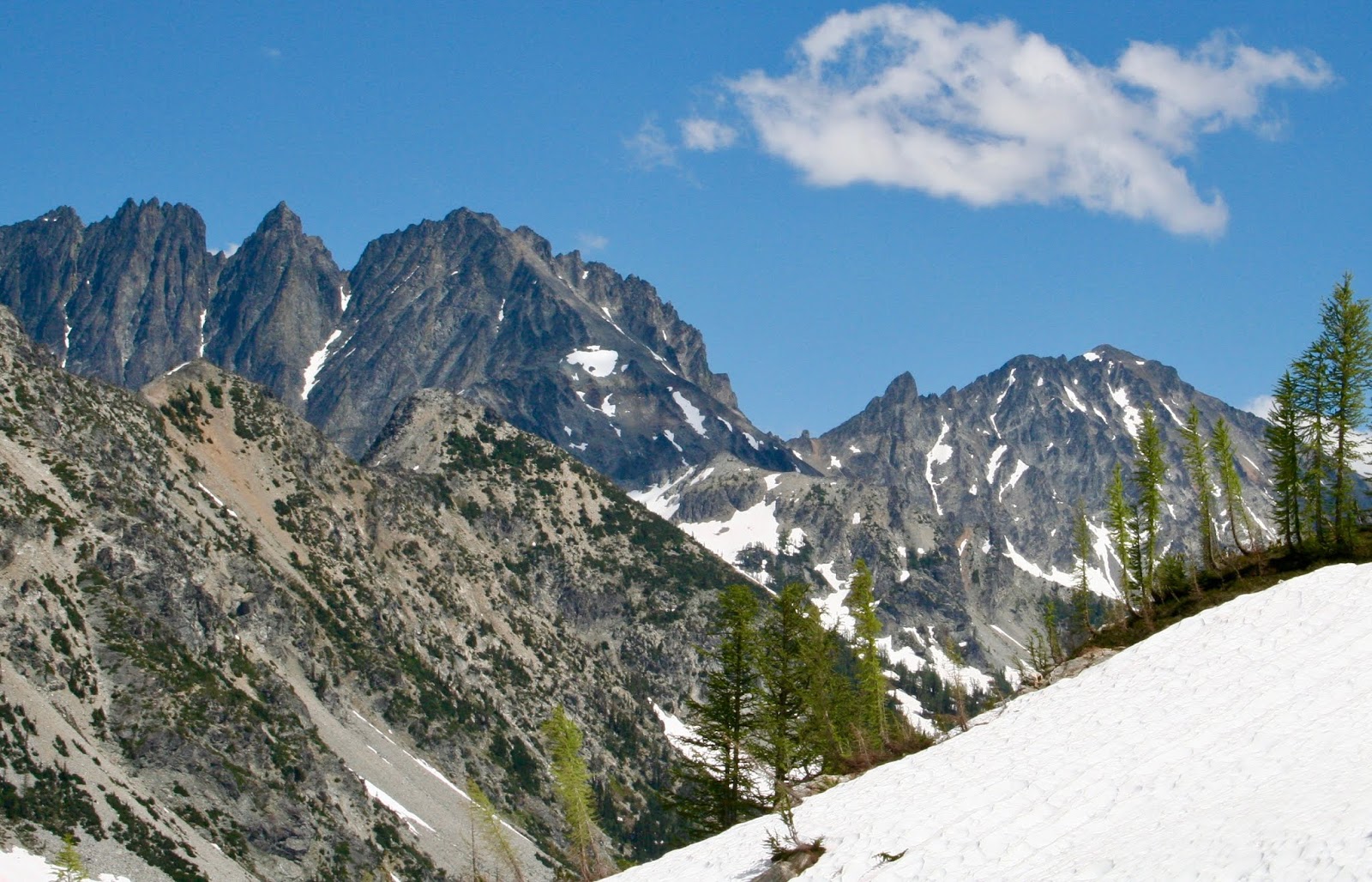
As long as I can remember, I’ve loved the mountains. Growing up in East Portland on (where else?) an extinct volcano known as Mt.Tabor, we had stunning views of both Mt. Hood and Mt. St. Helens, as well as a tiny tip of Mt. Adams, from the family home at 350 S.E. Gilham Avenue in the City of Roses.

At an early age, I took to adventures in the Cascades. In the Boy Scouts, I roamed the trails of the Mt. Hood National Forest and hiked from Timberline Lodge to the Columbia River Gorge on the Pacific Crest Trail. By age 12, I had climbed Mt. Hood with my dad’s high school climbing club associated with the Mazamas in Portland.

By the time I was 14, I had climbed Mt. St. Helens. In Boy Scouts, we’d spend a week at Spirit Lake on the north side of the peak. This was all before the blast. In the mid-60s, I kept having this recurring dream: gazing from our kitchen window, the mountain erupted. About 15 years later, it actually happened.

Climbing other lesser peaks during my high school years (I was quite busy with academic and athletic pursuits), I resumed my serious hobby in college, working at Crater Lake National Park, and the Forest Service on the Malheur and Wenatchee National Forests. After graduation from j-school, I resumed working for the U.S.F.S.

On the Lake Wenatchee District, which had peaks galore, I worked as a wilderness ranger for the next five years. By the early 80s, I had left the Forest Service for graduate school in journalism and a career in public relations, first at McKenzie-Willamette Hospital and then Eugene Water & Electric Board.

Being my career job, I spent 23 years at the utility. Hooking up with other like-minded backcountry enthusiasts, I reconnected with Oregon’s Cascade peaks while traveling to Lake Wenatchee to reacquaint myself with those trails and massifs. By 2008, I had retired from the utility to dedicate time to more wilderness endeavors.

In retirement, I’ve had the opportunity to explore my Alpine roots, with visits to Germany, Switzerland and Italy. My heroes throughout my climbing career were Fred Beckey, a Northwest resident (Seattle) who was a transplant from Germany, and Reinhold Messner, an Italian-cum-German citizen of South Tyrol.

Hence, I will initiate a series of posts on the the mountains of the Northwest, beginning with peaks I’m most familiar with in Oregon and Washington, in a series entitled “Fire and Ice” on the Cascades, this region’s contribution to the Pacific Ring of Fire that extends from the tip of South America to the tip of New Zealand.


Wednesday, October 30, 2019

Maurice And Me

Having just graduated from the University of Oregon School of Journalism as a redshirt senior, I departed Eugene in early 1977 for a seasonal job working as a forestry technician on the Lake Wenatchee Ranger District of the Wenatchee National Forest. Then, the unexpected happened.

My beloved Portland Trailblazers won the NBA championship behind Bill Walton, former UCLA Bruin, and a group of refugees from the American Basketball Association, including Dave Twardzik and a Marquette University graduate, Maurice Lucas. The two leagues had merged the previous year.

Maurice was known far and wide as the "Enforcer,” the sergeant-at-arms of that underdog Portland team that clawed its way to the NBA championship, matching up with the mighty Philadelphia 76ers featuring Julius Erving, AKA Dr. J., George McGinnis, Doug Collins and other top-flight players.

After dropping the first two games, the Blazers, under the leadership of Walton and Lucas, stuffed the Sixers by winning the next four in a row after an altercation between Lucas and Darryl Dawkins, a man-child behemoth playing for Philadelphia. The Blazers returned to Portland for a parade among elated fans.

That championship for the Blazers remains the only one in team history. Unfortunately, Walton would suffer a knee injury, and the team would not recover, despite a terrific start to the next season. They came close the 1990s under the leadership of Clyde Drexler and Terry Porter, and later, Arvydas Sabonis and Brian Grant.

Fast forward to the early 1990s, when Lucas worked as a consultant for a firm that had developed a unique-for-that-time survey technology.

Lucas agreed to come to EWEB for a media conference in the lobby. Eagerly accepting his offer, a press gathering was slated.

Lunching afterward with Lucas at The Excelsior near the UO campus, I learned about our common background receiving our education from the academics from the Society of Jesus, he at Marquette University in Milwaukee, Wisconsin and me at Jesuit High School in Beaverton, Oregon. All in all, a very successful day; the local media got their story, EWEB employees in attendance were thrilled.

Lucas would go on to serve as an assistant coach for the Blazers, and was a beloved figure among players, staff members and fans alike. The team had already retired his jersey, number 20, and he was named to the all-time all-ABA team along with Julius Erving and other American Basketball Association greats.

Lucas’ son, David Lucas, played his college hoops for the Oregon State University Beavers from 2001-2005 and Luke Walton, son of the Enforcer's teammate and Hall of Famer Bill Walton, is named after Lucas. He underwent surgery for gall bladder cancer in 2009 and died in 2010 in the City of Roses.

Fans have high hopes for this year’s version of the Portland Trailblazers after they reached the Western Conference finals last spring. Picked to finish second in the Northwest Division, the team is led by all-star Damian Lillard and C.J. McCollum and the team hopes to exceed last year’s accomplishments. Go Blazers!


Thursday, October 24, 2019

Even The Rats Smell A Rat

It’s rare where, as editorial director of the GonzoPR blog, I must rely on the entire brain trust on a conference call: Helmut Vallindaklopf, in D.C., covering the Americas, Ramona Vallindaklopf, in Genoa, Italy, covering Europe, Middle East and Africa, and Wolfgang Majoris, in Bangkok, Thailand, covering Asia and Australia.

As none other than Raoul Duke, AKA Hunter S. Thompson, duly noted, “truth is weirder than any fiction we’ve ever seen, and in a world of thieves, the only final sin is stupidity.” In Herr Gropenfuhrer’s corrupt administration, even the rats recognize the stench. How ironic.

In just the past couple of weeks, we’ve seen bizarre goings on in Syria, Turkey and the Ukraine, the heartland of our nation’s capital in Washington D.C. and Florida, and in China, where even the National Basketball Association has apparently succumbed to greed and avarice over the First Amendment of the U.S. Constitution.

JM: “Greetings, everyone. Thanks for joining me despite the variance in time zones. Let’s start with Helmut: what’s the climate look like in D.C. as you toil in your basement lair on Connecticut Avenue?”

HV: “Toasty, to say the least, JM. You have the impeachment process underway. Then, Herr Gropenfuhrer announces the G7 summit will be held at his Mar-A-Loco facility in Florida, And, as you noted, even the other rats are nervous that the orange top denigrates the emoluments clause in the U.S. Constitution.”

JM: “Indeed, what a ridiculous rulebook that is -- the U.S. Constitution. Herr Gropenfuhrer only pays attention to those amendments that matter to his ‘base,’ which appears to be small and growing smaller by the day.”

HV: “Oh, and the economy isn’t that great, either. The rich are getting richer and the poor are getting poorer, and White House staffers are either bailing, or noticeably absent.”

JM: “True enough, HV. Next up, we have Ramona Valindaklopf reporting from her base on the Italian Rivera, where she’s covering the inept foreign policy playing out in Syria and the Ukraine. What do you have for us, RV?”

RV: “Correct, JM. We have total abandonment of our allies, the Kurds, who were helping us beat back ISIS. Meanwhile, the Turks and Russians are filling the resulting void. Herr Gropenfuhrer is a weakling among the real strongmen around the world.”

JM: “And what of the Ukraine connection? Wasn’t the current president, Volodymyr Zelensky, an actor and comic who played, ironically, the president of the Ukraine in a sitcom?”

RV: “Indeed, he was. Before his election, he was last seen playing the piano with his, uh, johnson. Rudy Giuliani, Herr Gropenfuhrer’s personal lawyer known as the New York City subway of New York City mayors, attempted to initiate an investigation on Joe Biden and his son. Of course, he is in deep doo-doo with the impeachment hearing. Meanwhile, Ivanka, Beavis and Buttlead, Herr Gropenfuhrer’s progeny, are laying lower than snail shit on the bottom of the ocean.”

JM: “Wolfgang, let’s shift to Southeast Asia, where the National Basketball Association has sold its soul to the devil for profits over free speech in the U.S.”

WM: “Yep, that about sums it up. China has banned all preseason NBA games on state television and at least two large Chinese companies have dropped Houston Rockets gear. Even Lebron James has acquiesced in the interest of money and image after Houston Rockets GM Daryl Morey tweeted support for the protesters in Hong Kong.

JM: “Meanwhile, China’s Xi Jinping is a real strongman to Herr Gropenfuhrer’s mental midget.”

WM: “Yes. And China continues to eyeball Nepal, which suspects foul play. As Raoul Duke would say about Herr Gropenfuhrer: ‘You have to get paid for it or else you’re going to be locked up.’”

JM: “Hey, now there’s an idea. Lock him up. Well, that’s all the time we have this week. Check in with you all soon to keep tabs on this ongoing Kafkaesque nightmare.”


Monday, October 7, 2019

The Boy Scout And The Brainiac

Herewith begins a new series of tales from my career as a public relations coordinator for a once prominent Northwest public utility from 1986-2008. There, I met all kinds of interesting characters, many of whom I worked for and admired, and any number of others inadvertently brought together by happenstance.

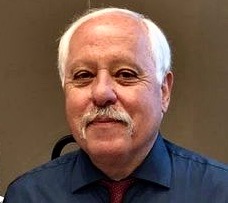
This story focuses on the latter: a random series of incidences I call the Boy Scout and the Brainiac. But before I begin weaving that tale, allow me to introduce the characters: one William (Bill) Eaton (above), retired utility education coordinator; and Amory Lovins (below), physicist and founder of The Rocky Mountain Institute.

In the early 90s, I met the Boy Scout, retired utility geek, critic and curmudgeon with an affinity for collecting electrical antiques from the post-Thomas Edison era, frequent pest at board meetings and letter writer to practically anybody willing to listen to him. Somehow, I had had become responsible for his care and feeding.

The Brainiac, an expert on energy policy and innovator of the “nega-watt revolution,” contended that utility customers do not want more kilowatt-hours of electricity but energy management services. With at least 10 honorary doctorates and numerous awards, Lovins has provided his expertise worldwide.

Joining the utility conservation department as a communications and marketing hack for a massive, federally funded weatherization effort in the mid-1980s, I became quickly engulfed and articulate in the philosophy and practice of the nega-watt revolution as espoused by the Brainiac: conservation and renewable energy.

Of course, the Boy Scout and the Brainiac were polar opposites. Bill Eaton was Old Testament: generate electricity in mass quantities for the good of all, as characterized by Mr. Redi Kilowatt, a funny-looking little dude who was the (ahem) cartoonish face of power marketing, such as it was back in the day.

The Brainiac, on the other hand, was New Testament, with a 180-degree perspective from that of the Boy Scout. Because you can only store so much electricity in batteries, Lovins reasoned, why not only use what you need, thereby achieving balance in the force? You know, more is less and less is more.

Turns out, Lovins would be the keynote speaker at the American Public Power Association utility conference in Colorado Springs and I would be in attendance: lucky me. More good news, the gig would be held at The Broadmoor, a five-star facility in the foothills of the Eastern Rockies, red-rock country to be exact.

Eager to learn, I lapped it up. Speaking knowledgeably about energy could be perplexing. How do you talk about a product that is invisible? Strategically, of course, through end uses. Need space heat? That’s typically the biggest energy drain. Water heating? Less electricity but still a significant contributor to energy usage.

Discussing electrical generation can also be tricky business. Ask a group of Rotarians where we get our energy and you’ll hear about Northwest hydropower. Ask a group of school kids where we get electricity and they’ll point to an outlet. Both demographics are correct, of course, and should received full points.

Yet, even renewable energy has environmental issues. Hydropower creates problems for upstream and downstream fish migration, particularly salmon, a Northwest icon. Wind power affects birds and bats and things. Effects from both sources of renewables must be mitigated. And don’t get me started on fossil fuel generation.
Nonetheless, the cleanest and lowest cost energy source is conservation. Save energy right at the source: where we use it. Efficient windows and doors, insulation, natural lighting, efficient artificial lighting, passive and active solar applications. Few people know “demand-side” management like Amory Lovins.

As the presentation began, I gathered a chair in the front row, as is my style, where lots of butts disguised as empty seats joined me. I prefer a spot with access to the speaker, enhancing effective listening and note-taking opportunities and photo ops. I was so close to the Brainiac that he couldn’t help but notice my name tag.

“Hey, I want to talk to you after the session,” Lovins said. “Me?” I queried, turning around to see who he might really be addressing. “Yes, you,” he confirmed. I was puzzled but pleased that a keynote speaker of such significance would be interested in talking to the likes of me, a public relations and marketing professional.

After his presentation, I received unfettered access to the Brainiac. He knew who I worked for and was hoping to gather another Northwest utility of note as a client of E Source, his consulting group that helps utilities advance the concepts inherent with the efficient use of energy in an increasingly complex natural environment.

On my way home, I had the good fortune to sit next to the Brainiac himself on the commuter flight from Colorado Springs to Denver. Quite an interesting fellow to be sure. He explained how one Japanese client would test job candidates by having them stick their hands inside a black box.

“What was in the box,” I asked, “A tarantula?” He laughed aloud. Guffawed, actually.  I think he enjoyed my obtuse sense of humor, and we agreed that he would come to Eugene and make a presentation to my utility while conducting a news conference for the local media. Big score for yours truly.

Meanwhile, back at The Ponderosa, the Boy Scout was making preparations for his legacy: an antique appliance display for the utility featuring old electric gizmos and gadgets of all kinds. We purchased a pastry case for the small stuff and displayed the monitor-top refrigerator and larger appliances by themselves.

When the Boy Scout discovered the fact that the Brainiac would conduct a presentation and media conference at my utility, he was all in, for the wrong reasons as usual. Yes, he was that kind of troublemaker, and also known to be lecherous with the ladies he encountered in his daily travels.

The good news is that the Brainiac arrived in town promptly and provided a noteworthy presentation that was a hit with utility types and media wonks alike, and picked up another client for E Source in their endeavor to help utilities solve problems and make business decisions that serve customers well.

The Boy Scout was reasonably well behaved except for an off-color comment about Hunter Lovins, an environmentalist, lawyer, political scientist, university professor, business whiz and Amory’s then-spouse, growing nice “tomatoes” at their unique conservatory at the Rocky Mountain Institute in Snowmass, Colorado


Wednesday, September 18, 2019

Malheur Magic

About 45 years ago, I arrived at the Blue Mountain Work Center near Austin Junction, east of Prairie City, Oregon, from Eugene. A young college student at the University of Oregon School of Journalism in 1974, I was hired that summer as a wandering factotum -- sort of a jack-of-all-trades -- by the Malheur National Forest.

The year before, I worked as a tour guide at Crater Lake Lodge, Inc. This time around, it would be no glamour detail. I’d have to work, backpack and engage wilderness users throughout the entire forest. On the Malheur National Forest, I worked on all four ranger districts on the forest (Long Creek, Prairie City, Hines and Bear Valley).

I explored virtually the whole forest during my 6-month stint there. On Long Creek, I served as weekend sub on the Indian Rock Lookout (elevation 7,375), and Dixie Lookout (elevation 7,511). On the Prairie City District, I pulled sub duties on Antelope Lookout (elevation 6,456). Also marked timber and subbed on the helitack crew.

This wilderness is fairly small (68,700 square acres). By comparison, the Glacier Peak Wilderness, where I worked for nearly the next decade, is 566,057 square acres. We had no fewer than 15 wilderness rangers in Glacier Peak on six districts. I was one of that dedicated group of "wilderness strangers" for eight summers.

Yes, you’d be surprised how many obscure but tall peaks there are in the great divide between the Snake and Columbia Rivers near John Day. However, they are nothing a pissant couldn’t hop over compared to the North Cascades (below), where I would soon land, staying from 1975-82, and meet my lovely bride of 41 years.

As an aside, read “Astoria: Astor and Jefferson’s Lost Pacific Empire” by Peter Stark, where you’ll learn that John Day was a member of Astor’s overland party. He died nearby in a skirmish with the natives. No wonder Malheur is called “bad times” or “misfortune” by the French voyageurs who were part of the overland party.

After living at the Blue Mountain Work Center in Austin Junction, I moved the Forest Service housing in Prairie City (above), Yes, it’s the hub of cattle country (Oxbow was the big one), but timber production had gone downhill in the 70s, when the Hines mills shut down in John Day, Bates and other locations.

Prairie City is a one-horse town. John Day has slightly more to offer in terms of consumer goods. After all, it is the biggest town in Grant County. Still not much to look at, though. It’s a major intersection for two U.S. highways. I like Canyon City, in the shadow of Canyon Mountain two miles south of John Day. Much better pizza, too.

The Sumpter Valley Road (now Oregon Route 7) from Austin Junction to Baker City is very scenic and features many ghost towns (Austin, Whitney, Greenhorn and Granite, to name a few). I love ghost town lore, The Sumpter Valley Road to Baker City was paved a couple years after I left Austin Junction.

Much like other Eastern Oregon towns, they roll up the sidewalks about 9 p.m. Better be well stocked at home. As a college student from Eugene, I kept a pretty low profile among the NRA/bubba types in the John Day Valley. They would have executed me by firing squad if they could. It’s still Trump country, but imagine 1974.

In 1975, I was enticed to apply for a position on the Wenatchee National Forest by a girl I had met in Prairie City. Our romance didn’t work out, but I began a life-long love affair with the North Cascades, which are much more spectacular than anyplace in Eastern Oregon. Nonetheless, I very much enjoyed my stint on the Malheur.

On the Lake Wenatchee District alone, we had a dozen over 8,000- and 9.000-footers, including Clark Mountain (pictured) Mt. Maude, Seven-Fingered Jack, Buck Mountain, Copper Peak, Chiwawa Mountain, Fortress Mountain, Copper Mountain and others. And these peaks begin at 1,800 feet above sea level.

And did I even mention the glaciers? Glacier Peak has glaciers in its butt crack and creases. Washington has 90 percent of the glaciers in the Lower 48. Eastern Oregon might have one in the Eagle Cap Wilderness Area. I would know. Trails are steeper, and lusher with vegetation. And bugs.

Nonetheless, Oregon and Washington are both beautiful for many reasons. I’m grateful to have explored the wilderness in both states: Kalmiopsis Wilderness Area (Brookings), Crater Lake and environs, Three Sisters, Mt. Jefferson and especially Mt. Hood (below) and Mt. St. Helens, along with Glacier Peak and environs.


Saturday, September 14, 2019

Litany Of Paradox

Bizarro World is a fictional planet from my years reading Superman comics in the early 1960s. Introduced as a cube-shaped world, home to Bizarro Superman, who is bad, and Bizarro Joker, who is good, and other anomalies, the planet is weirdly inverted.

Welcome to the United States of 2019, where the bizarre has become commonplace, thanks to Herr Gropenfuhrer, Moscow Mitch and their odd band of pirates and dingbats. Today, up is down, science is bunk, good is bad, and democracy is an authoritarian oligarchy.

These are desperate times, people. Desperate times call for desperate measures. As such, I conducted a conference call with all three correspondents for the GonzoPR blog: Helmut Vallindaklopf, Wolfgang Majoris and Ramona Vallindaklopf.

JM: “Greetings, staff. Thank you for joining me at this odd time of the day. I know it’s late in Genoa, working hours in Eugene, and not yet dawn in Bangkok. So, I really appreciate your participation.”

RV: “Well, sure, JM. It’s well past cocktail your here, so I apologize in advance if I sound a tad vulgar.”

HV: “Wish it was cocktail hour here in D.C., sis. I suppose it’s close to 5 p.m., so that will be my excuse.”

WM: “Hey, I haven’t even had my tea here in the empire of the sun. I must get a pot going.”

JM: “I think we can all assume that it’s going to get weirder for Herr Gropenfuhrer before Election 2020, right? What can you report from your underground lair on Connecticut Avenue, Helmut?”

HV: “Uh, you forgot a few things for your litany of paradox, JM. For one thing, truth has become lies. The pattern is clear, and the tactics have become painfully obvious. The First Amendment is under attack. Truth is not negotiable.”

JM: “And what of ‘Sharpiegate,' Helmut?”

HV: “Indeed, another example of distorted truth from Bizarro World. Herr Gropenfuhrer fancies himself a meteorologist. Hey, I’ve got an idea! Let’s drop a nuclear bomb on that hurricane. We’ll show that storm who is boss.”

RV: “And don’t forget about another key message from Bizarro World. Friends are enemies and enemies are friends. What’s-his-name wants to be buddies with the Taliban all of a sudden, while Denmark, Germany and other European allies are persona non grata?”

WM: “Yes, Ramona, and don’t forget his pal Kim Jong-Un is exalted by Herr Gropenfuhrer, while Japan and South Korea say: ‘what?’”

JM: “Truly bizarre. We can’t stop fighting now. This is bat country. We must resist and retaliate.”

WM: “Indeed. Freedom is something that dies unless it’s used. We must rally the troops and oust that imbecile from office.”

JM “Yes, we must vote, and pray to God but row away from the rocks. Too early for cocktails in Bangkok, Wolf?”

WM: “As Helmut so eloquently stated, it’s 5 p.m. somewhere.”

JM: “Well put. We’ll catch you all on the flip side. Ciao.”


Monday, September 2, 2019

The Pointless Man

In “The Point,” a 1971 animated story by Harry Nilsson and Carol Beers, the protagonist, a little boy named Oblio, is banished from his home to the Pointless Forest because he “has no point.” He is unfairly tried and convicted, along with his dog, Arrow, for this alleged crime by the evil Count, who loathes Oblio's apparent pointlessness.

In the Pointless Forest, he encounters the Pointless Man, who proves to be the most pointless of beings. His opinions and positions are thoughtless and rushed; he is a false prophet. He is harsh, petty, fickle and unreliable. But he notes, “a point in every direction is like no point at all. Any fool can do that.”

Later, Oblio meets the Rock Man, who says that “there ain’t nothing pointless about this gig. Hey, man, you don’t have a point (on your head), to have a point.” In other words, what is pointlessness, and who gets to make that decision? Everyone and everything Oblio meets refuses to fit into a binary box, an easy label.

Couldn’t help but connect the dots between Herr Gropenfuhrer and The Pointless Man. I thought it was high time for some wisdom from Helmut Vallidaklopf, correspondent for the Americas for the GonzoPR blog who’s undercover in his basement bunker along Connecticut Avenue near the White House.

JM: “Good morning, Helmut. How goes the battle? Keeping cool?”

HV: “Keeping the faith and staying cool as a rock.”

JM: “So you’ve seen ‘The Point,’ eh? Do you also see the comparisons between the Pointless Man and Herr Gropenfuhrer?”

HV: “Oh, yes. As you may remember, when Oblio returns to the Pointless Village, the denizens of the land are overjoyed to see him. None of them felt good about the rules that sent him away in the first place, and his return has galvanized them to stand up to the rules of the law itself. We must regain control.”

JM: “Yes, indeed. And, the law has been usurped by Herr Gropenfuhrer and his minions and appeasers.”

HV: “The analogy between the Pointless Man and Herr Gropenfuhrer is uncanny. He points a finger in all directions to blame Americans for its woes: the Democrats, Hillary Clinton, immigrants, American people of color, sunspots. Plus he has a case of Obama envy.”

JM: “Indeed. He must go. We must reject the authoritarian rule of the land with the power of our votes. Well, keep cool, amico mio. I suggest a tall Paulaner or Spaten at cocktail hour.”

RV: “Sounds like a plan, JM. We’ll catch up later.”